Most people assume lip filler migration is rare or only happens to unlucky patients. The truth is that what causes lip filler migration is almost always traceable to specific, preventable factors. Whether you’re considering your first treatment or you’ve noticed something off about a previous result, understanding why filler moves gives you real power over the outcome. This article breaks down the medical causes, the warning signs, how to avoid the problem entirely, and what to do if migration has already happened.
Table of Contents
Key takeaways
| Point | Details |
|---|---|
| Overfilling is the top cause | Excessive filler volume creates internal pressure that pushes product beyond the lip border. |
| Injector skill matters enormously | Incorrect injection depth and poor technique are leading contributors to filler migration. |
| Cheap fillers carry permanent risks | Non-biodegradable substances like liquid silicone can migrate and cannot be dissolved with hyaluronidase. |
| Migration has clear visual signs | A “filler shelf” above the lip, blurred borders, and persistent lumps are the main indicators. |
| Correction is possible but multi-step | Hyaluronidase dissolves migrated HA filler, though several sessions may be needed for full resolution. |
What causes lip filler migration
Lip filler migration means the injected product moves away from the original treatment zone and spreads into surrounding tissue. Migration occurs due to overfilling, incorrect injection depth, repeated stacking, and high lip mobility. It is not random. Each of these causes has a clear mechanism worth understanding before you book any appointment.
The most common culprit is overfilling. When too much product is injected into the lip, the tissue pressure builds up fast. Excessive volume forces filler above the upper lip skin and into areas that were never meant to be treated. Think of it like overfilling a balloon: at some point, the material finds the path of least resistance and moves.
Injection depth is the second major factor. Superficial placement causes ridges, puffiness, and displacement because filler placed too close to the skin surface lacks the structural support that deeper tissue provides. Going too deep carries its own risks, but the sweet spot requires anatomical knowledge that only comes from proper training.
The lips are also one of the most mobile areas of the face. The orbicularis oris muscle contracts constantly during talking, eating, and expressing emotion. That repeated mechanical pressure physically shifts filler over time, particularly when the product is already sitting in a compromised position.
Finally, stacking treatments without dissolving previous filler layers is a setup for trouble. Repeated treatments stretch tissue and blur lip contours as cumulative volume overwhelms the lip’s structural limits.

Pro Tip: Before any lip filler appointment, ask your provider how much product they plan to use. Anything beyond 1 ml per session for first-time patients should prompt a detailed conversation about your anatomy and goals.
Filler material and injector expertise
Not all fillers carry the same migration risk. Medical-grade fillers are bio-absorbable hyaluronic acid (HA), while cheap fillers may contain non-biodegradable substances like liquid silicone that increase migration risk significantly. The distinction matters because HA fillers are reversible. Liquid silicone and other permanent substances are not.
| Filler type | Reversible? | Migration risk | Correction method |
|---|---|---|---|
| Hyaluronic acid (HA) | Yes | Moderate, manageable | Hyaluronidase dissolution |
| Liquid silicone | No | High, permanent | Surgical removal only |
| Unregulated cheap fillers | Usually no | Very high | Unpredictable, often surgical |
| RHA dynamic fillers | Yes | Lower | Hyaluronidase dissolution |
Unlicensed practitioners and cheap fillers lead to chronic inflammation, granulomas, and irreversible tissue damage. This is not a scare tactic. It is a documented pattern in patients who prioritize price over credentials.
“Choosing bio-compatible, reversible fillers is key to managing risks and enabling corrective treatments if migration occurs.” The ability to dissolve a filler with hyaluronidase is not a nice-to-have. It is your safety net.
On the positive side, newer filler formulations are specifically designed to reduce migration. RHA fillers mimic natural hyaluronic acid and move harmoniously with skin expressions, which reduces the displacement risk that comes with stiffer products. Understanding your lip filler types before committing to a treatment helps you ask better questions and make a genuinely informed choice.
Pro Tip: Always verify that your injector is a licensed medical professional. Credentials to look for include registered nurses, nurse practitioners, physician assistants, and physicians with aesthetic training. This single factor reduces complication risk more than any other.
What migrated lip filler looks like
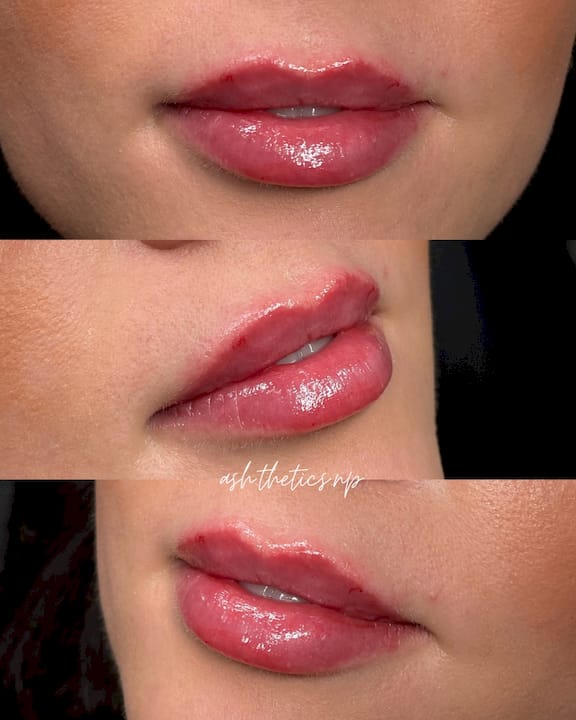
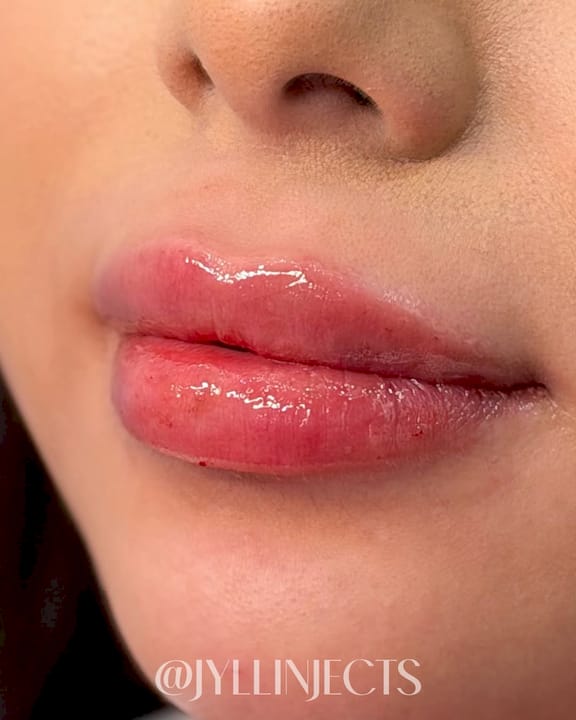
Knowing what lip filler migration looks like helps you catch the problem early. Signs of migration include fullness above the lip border, a blurred natural lip line, and persistent lumps after the normal swelling phase has passed. These signs help distinguish migration from ordinary post-treatment settling.
Here is what to watch for specifically:
-
The “filler shelf.” A visible ridge or ledge of fullness sitting above the vermillion border (the natural edge of your lip). This is one of the clearest early signs.
-
Blurred lip borders. The defined outline between your lip and the surrounding skin loses its crispness. Your lip looks like it is “bleeding” into the area above it.
-
Persistent lumps or asymmetry. Some swelling and minor lumps are normal for the first one to two weeks. Lumps that remain beyond that point are worth evaluating by your provider.
-
Heaviness or unnatural movement. Feeling like your upper lip does not move naturally when you speak or smile can indicate that filler has shifted into tissue that should remain mobile.
-
Gradual changes over months. Migration does not always happen overnight. Some patients notice slow creep over successive treatments rather than a sudden dramatic change.
Normal filler settling feels like softening and slight reduction in volume over the first few weeks. Migration feels and looks structurally different: the fullness appears in the wrong place, not just a smaller version of the right result.
How to avoid lip filler migration
Prevention is far more effective than correction. Here are the most impactful steps you can take before and after treatment:
-
Choose a qualified medical injector. This is non-negotiable. A licensed medical professional with specific aesthetic training understands lip anatomy at a level that minimizes all the causes discussed above.
-
Respect volume limits. Resist pressure to add more product per session than your anatomy can support. More is not always better, especially with lips.
-
Allow sufficient time between treatments. Rushing back for top-ups before previous filler has fully integrated increases the risk of product stacking and cumulative pressure.
-
Ask about filler formulation. Request medical-grade, bio-absorbable HA fillers. Ask specifically whether dynamic options like RHA are appropriate for your lip shape and lifestyle.
-
Follow post-care instructions precisely. Avoid heavy pressure on your lips, skip intense exercise for 24 to 48 hours, and stay away from high-heat environments like saunas in the first days after treatment. Detailed swelling management steps can also reduce early disruption to filler placement.
You can also explore natural ways to minimize migration as a complement to professional aftercare. Good skin hydration, avoiding aggressive facial massage near the lip area, and keeping follow-up appointments all contribute to stable, long-lasting results.
Pro Tip: If a provider quotes you a price that seems unusually low or agrees to inject more than 1 ml in a first session without assessing your lip anatomy, take that as a signal to get a second opinion.
Treatment options when migration occurs
If you recognize the signs of migrated filler, the path forward depends largely on what type of filler was used.
-
Hyaluronidase for HA fillers. This enzyme dissolves hyaluronic acid and is the standard correction for migrated HA-based products. Multiple dissolving sessions may be needed depending on the volume involved and how long it has been in place.
-
Do not self-treat. Massaging migration lumps at home or seeking unlicensed “top-up” corrections often worsens inflammation and displaces product further. Avoid applying pressure to lumps; professional assessment is the only safe route.
-
Surgical intervention for non-HA fillers. If a permanent or non-biodegradable substance was used, surgical removal may be the only option. This is another reason why lip filler risks and benefits deserve careful review before any treatment.
-
Patience during the correction process. Dissolving migrated filler is a process, not an instant fix. Expect multiple appointments spaced weeks apart, and give your tissue time to heal between sessions.
-
Consult a specialist, not just any provider. Migration correction requires skill. Seek out a provider experienced specifically in filler complications, not just filler placement.
My honest take on lip filler migration
I have seen both sides of this conversation. On one side, there are patients who came in terrified by social media horror stories, convinced that migration was inevitable. On the other, there are patients who waved off every caution because their friend “had it done cheaply and it was fine.”
The reality I keep coming back to is that migration is genuinely preventable in the vast majority of cases. What I have learned is that fear and overconfidence are equally unhelpful. Fear stops people from getting treatments that would genuinely improve their confidence. Overconfidence leads people to cut corners on provider credentials or push for too much volume in one session.
What actually changes outcomes is education. When patients understand the causes and know what migrated lip filler looks like early on, they make smarter choices. They ask better questions. They wait the appropriate time between sessions. They value a skilled injector over a low price.
The development of dynamic fillers like RHA has also genuinely shifted what is possible. A filler designed to flex with your expressions is a different product than a stiff gel that resists movement and eventually loses that battle. Newer formulations have made it easier to achieve natural-looking, stable results.
My advice is simple. Treat your injector choice with the same care you would give a surgeon. Understand your anatomy. Ask questions until you feel genuinely informed. And if something looks or feels off after a treatment, act on it early rather than waiting to see if it resolves on its own.
— Marina
Safe lip fillers at Theinjectionroom
At Theinjectionroom, every lip filler treatment in Austin and San Antonio is performed by licensed medical professionals using only medical-grade, bio-absorbable products. The team specializes in precise anatomical injection technique to minimize the risk of migration from the start. If you’ve experienced complications from a previous treatment elsewhere, correction services using hyaluronidase are available, and consultations are personalized to your specific anatomy and goals. Whether you’re exploring lip enhancement for the first time or seeking a safer provider after a difficult experience, the focus at Theinjectionroom is on results that look natural, last well, and put your safety first. Learn more or book a consultation through professional injectable services at Theinjectionroom today.
FAQ
What is lip filler migration?
Lip filler migration means the injected product moves outside the originally treated area, most commonly appearing above the vermillion border as a “filler shelf” or blurred lip line.
What makes lip filler migrate?
The primary causes are overfilling, incorrect injection depth, repeated stacking of treatments without dissolving previous filler, and the constant mechanical pressure of lip movement from the orbicularis oris muscle.
What does migrated lip filler look like?
Migrated filler appears as fullness above the lip border, a loss of the natural lip outline, persistent lumps after normal swelling has resolved, or an unnatural heaviness during facial movement.
Can lip filler migration be fixed?
Yes, when hyaluronic acid filler is used. Hyaluronidase dissolves the migrated product, though multiple treatment sessions are typically needed. Permanent fillers like liquid silicone may require surgical removal.
How do I avoid lip filler migration?
Choose a licensed medical injector, avoid overfilling, allow adequate time between sessions, use medical-grade HA fillers, and follow all post-care guidelines carefully to keep the product stable after treatment.


%20Pictures%20are%204%20weeks%20apart..jpg)