Choosing the right cheek filler can feel overwhelming with so many options promising volume and contour. You want natural results that enhance your features without looking overdone, but understanding which filler delivers the best outcome for your unique anatomy requires knowing what separates good from great. This guide breaks down the essential criteria, compares top filler types, and provides expert insights to help you make an informed decision that aligns with your aesthetic goals and delivers the youthful, balanced look you’re after.
Table of Contents
-
Hyaluronic Acid Fillers: Safe And Versatile Cheek Volumizers
-
Longer-Lasting Alternatives: Calcium Hydroxylapatite, PLLA, And PMMA Fillers
-
Choosing The Right Filler For Your Cheeks: Expert Advice And Common Pitfalls
-
Explore Cheek Filler Treatments At The Injection Room In Texas
Key takeaways
| Point | Details |
| Hyaluronic acid fillers | Safe, reversible options providing natural volume lasting 6-18 months with immediate results |
| Longer-lasting alternatives | Calcium hydroxylapatite and PMMA offer extended duration but lack reversibility and require skilled injectors |
| Individual anatomy matters | Your facial structure, volume loss pattern, and aesthetic goals determine the ideal filler choice |
| Consultation is essential | Expert evaluation ensures proper product selection and injection technique for natural harmony |
| Gradual approach works best | Building volume over multiple sessions prevents overfilling and maintains facial balance |
Key factors to consider when choosing cheek filler
Your facial structure plays a crucial role in determining which filler works best for your cheeks. Women experience volume loss differently based on bone structure, skin thickness, and aging patterns. Some need projection in the mid-cheek area, while others require lifting along the cheekbone or filling hollow areas beneath the eyes.
Filler properties vary significantly across products. Viscosity affects how the product spreads under your skin, cohesivity determines how well it maintains shape, and lifting power dictates its ability to support sagging tissue. High G-prime fillers provide robust structural support for cheekbones, while softer formulations blend smoothly for subtle volume enhancement. The choice of filler depends on patient anatomy, outcome desires, and injector expertise.
Longevity represents another critical consideration. Hyaluronic acid fillers typically last 6-18 months, calcium hydroxylapatite extends to 12-18 months, while PMMA and PLLA options provide results lasting years. Your lifestyle, metabolism, and how quickly your body breaks down the product all influence duration. Faster metabolizers may see results fade sooner, requiring more frequent touch-ups.
Safety and reversibility matter tremendously. Hyaluronic acid fillers can be dissolved with hyaluronidase if you’re unhappy with results, offering peace of mind. Other filler types lack this safety net, making initial product selection even more important. Understanding how to assess skin for fillers helps you prepare for consultations and ask informed questions.
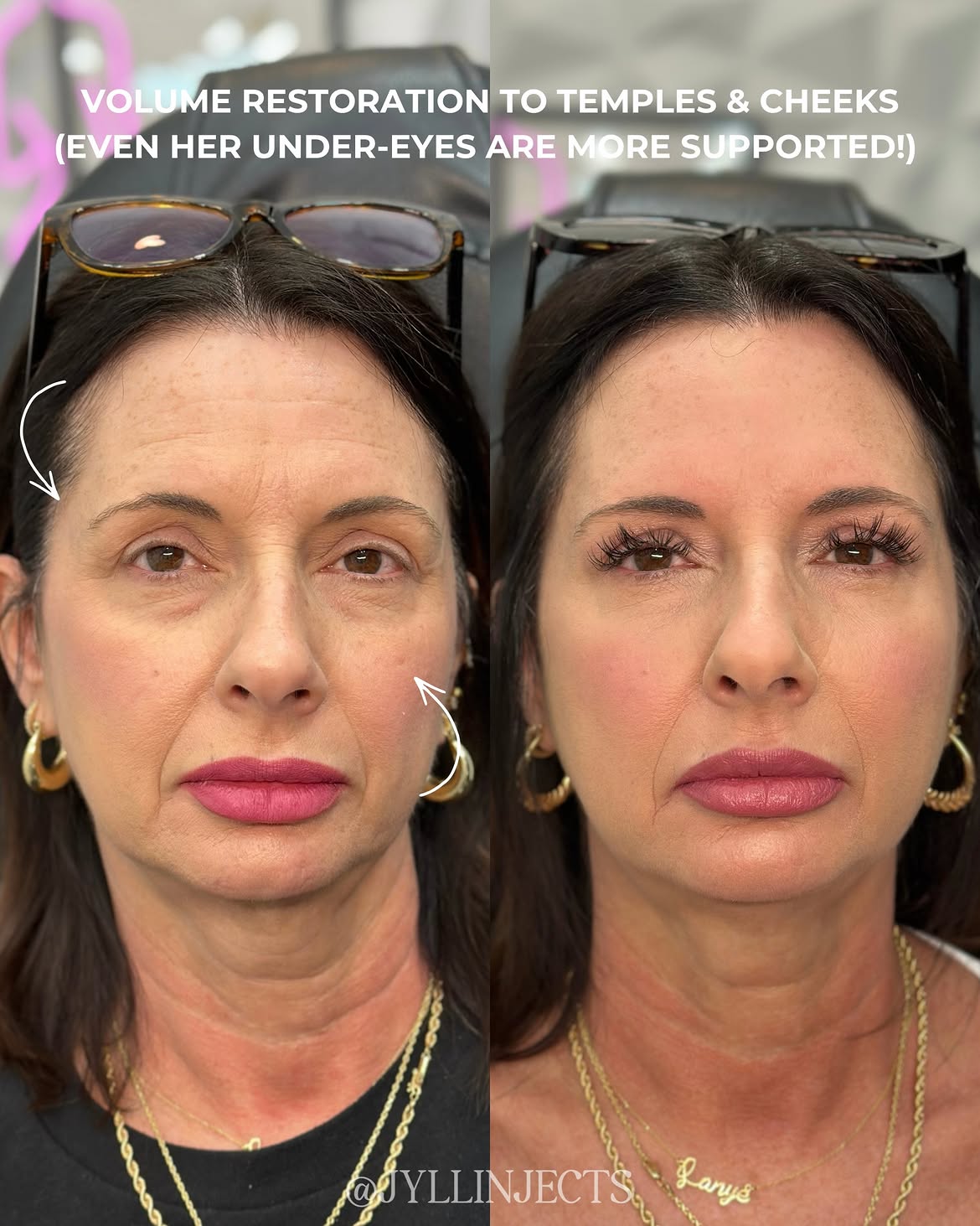
Injector expertise cannot be overstated. The most advanced filler won’t deliver beautiful results in inexperienced hands. Expert injectors emphasize thorough consultation to match filler selection with individual features, injection depth, and technique. Look for practitioners with extensive cheek augmentation experience and a portfolio demonstrating natural-looking outcomes.
Pro Tip: Bring photos showing your cheeks at a younger age to consultations. These images help your injector understand your natural volume distribution and recreate youthful contours authentically.
Hyaluronic acid fillers: safe and versatile cheek volumizers
Hyaluronic acid fillers dominate cheek augmentation because they deliver immediate volume, feel natural, and offer reversibility. These biocompatible gels work by attracting water molecules, plumping skin from within while stimulating collagen production for gradual improvement. Your body naturally produces hyaluronic acid, making these fillers exceptionally safe with minimal rejection risk.
Properties vary significantly across HA brands. G-prime measures a filler’s resistance to deformation, essentially its stiffness and lifting capacity. Higher G-prime products like Juvederm Voluma XC provide robust structural support, making them ideal for cheekbone projection and mid-face lifting. Lower G-prime fillers integrate smoothly for subtle volume without obvious contours. Particle size and cross-linking technology also affect how the product spreads and how long it lasts.
Juvederm Voluma XC offers robust lift and results lasting up to two years, leading the market for cheek augmentation. Its Vycross technology creates a smooth, cohesive gel that resists migration and maintains shape beautifully. Patients report high satisfaction with natural-looking volume that doesn’t feel lumpy or artificial.
Restylane Lyft represents another top choice, achieving similar volumizing effects with slight formulation differences. Some injectors prefer its handling characteristics or find it integrates better with certain skin types. Both products deliver excellent results when properly placed by skilled practitioners. Exploring best fillers for cheeks helps you understand the full range of HA options available.
Typical duration ranges from 6-24 months depending on the specific product, injection depth, and your individual metabolism. Voluma and Lyft tend toward the longer end of this spectrum, while other HA fillers may require touch-ups sooner. Factors like sun exposure, smoking, and exercise intensity can accelerate breakdown.
Side effects usually involve mild swelling, bruising, and tenderness at injection sites, resolving within days. Serious complications remain rare with HA fillers, especially when administered by experienced injectors following proper technique. Understanding types of cheek filler options helps you weigh benefits against potential risks.
Pro Tip: Schedule cheek filler appointments at least two weeks before important events. This timing allows any bruising or swelling to resolve completely, ensuring you look your best.
| Filler Brand | Duration | G-Prime | Best For |
| Juvederm Voluma XC | 18-24 months | High | Cheekbone lift and projection |
| Restylane Lyft | 12-18 months | High | Mid-face volume and contour |
| Juvederm Volbella | 6-12 months | Low | Subtle smoothing and blending |
| Restylane Refyne | 12 months | Medium | Natural movement with volume |
Longer-lasting alternatives: calcium hydroxylapatite, PLLA, and PMMA fillers
Calcium hydroxylapatite fillers provide immediate volume while stimulating collagen production for lasting improvement. Radiesse leads this category, offering results that extend 12-18 months as your body gradually replaces the product with natural collagen. The mineral-based formula creates a scaffold supporting tissue regeneration, making it particularly effective for deeper structural support.
CaHA lacks reversibility, meaning you cannot dissolve it if you’re unhappy with placement or volume. This permanence requires careful consideration and absolute confidence in your injector’s skill. The product works beautifully for women with significant volume loss who want robust, lasting correction without frequent maintenance appointments.
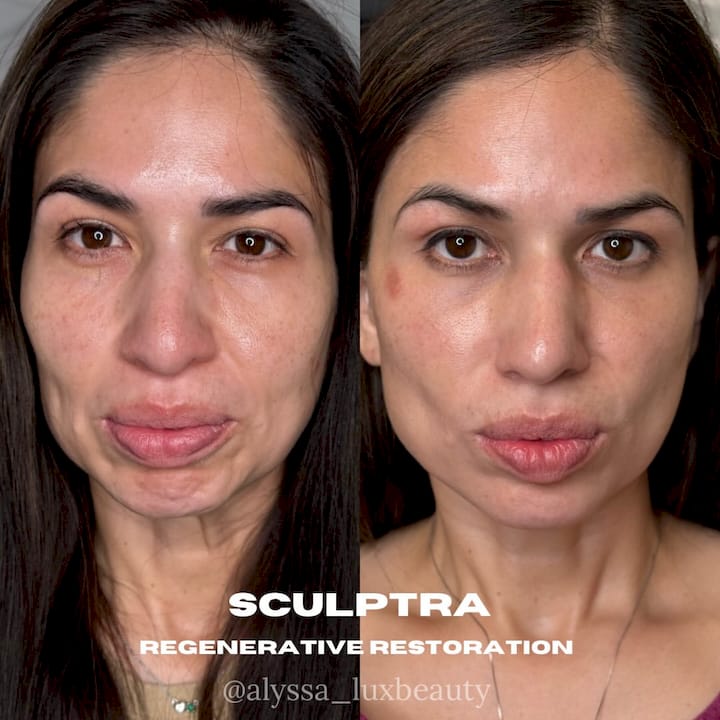
Poly-L-lactic acid fillers act gradually, building collagen over several months rather than providing instant volume. PLLA yields sustained improvement beyond 25 months by stimulating your body’s natural collagen production. Sculptra represents the primary PLLA option, requiring multiple treatment sessions spaced weeks apart for optimal results.
The delayed gratification aspect suits women who prefer subtle, progressive enhancement over dramatic immediate change. Results emerge slowly as new collagen forms, creating natural-looking volume that doesn’t announce itself as filler. However, patience is essential since you won’t see final outcomes for several months after your last treatment session.
Polymethylmethacrylate fillers provide permanent volume but require experienced injectors due to higher complication risk. Bellafill contains PMMA microspheres suspended in collagen gel, creating lasting structural support that doesn’t break down. The permanence appeals to women tired of repeated treatments, but it also means living with results indefinitely, whether you love them or not.
Safety, patient goals, and anatomy guide filler choice more than any single factor. Younger women with minimal volume loss might prefer reversible HA fillers they can adjust over time. Older women with substantial hollowing may benefit from longer-lasting CaHA or PLLA options that rebuild foundational volume. Understanding types of facial fillers and following dermal fillers step by step guidance ensures informed decisions.
Pro Tip: Start with reversible HA fillers for your first cheek augmentation. Once you understand how fillers feel and look on your face, you can confidently explore longer-lasting options.
| Filler Type | Duration | Mechanism | Reversible | Best Candidate |
| Hyaluronic Acid | 6-24 months | Immediate volume | Yes | First-time users, those wanting flexibility |
| Calcium Hydroxylapatite | 12-18 months | Volume plus collagen stimulation | No | Moderate volume loss, seeking longevity |
| Poly-L-Lactic Acid | 25+ months | Gradual collagen building | No | Significant volume loss, patient for results |
| PMMA | 5+ years | Permanent structural support | No | Severe volume loss, committed to permanence |
Choosing the right filler for your cheeks: expert advice and common pitfalls
Thorough consultation helps match filler type and volume to your unique features. Your injector should evaluate bone structure, skin quality, existing volume, and asymmetries before recommending specific products. Discussing your aesthetic goals openly ensures alignment between your vision and realistic outcomes. Bring reference photos showing looks you admire, but understand your facial anatomy may require different approaches to achieve similar results.
Injectors must factor aging changes and avoid unnatural overfilling that creates puffy, distorted cheeks. Respecting facial harmony is critical to natural results, meaning your enhanced cheeks should complement your other features rather than dominate your face. Too much volume or improper placement can actually age you by creating heaviness or disrupting proportions.
A balanced approach ensures improved contours while preserving your unique facial character. The goal isn’t to look like someone else or achieve a one-size-fits-all aesthetic. Instead, skilled injectors restore youthful volume patterns specific to your face, enhancing what nature gave you rather than creating artificial features.
Experienced injectors customize technique and product choice based on individual needs. They might use different fillers in various cheek zones, combining high G-prime products for structural lift with softer formulations for smooth transitions. Injection depth, angle, and volume all get tailored to your anatomy. Comprehensive consultation is essential to tailor filler choice and injection technique, so never rush this crucial step.
Understanding how to assess skin for fillers before your appointment helps you participate actively in treatment planning. You’ll better understand your injector’s recommendations and feel confident in the selected approach.
Pro Tip: Request a conservative initial treatment with plans for a follow-up appointment in two weeks. This gradual approach lets you adjust to your new contours and add more volume if desired, preventing the overfilled look that’s difficult to correct.
“The art of cheek augmentation lies not in how much filler you use, but in how skillfully you restore natural volume patterns while respecting each patient’s unique facial architecture and aesthetic preferences.”
Explore cheek filler treatments at The Injection Room in Texas
Ready to enhance your cheeks with expert care? The Injection Room offers professional injectable treatments tailored to your goals and anatomy across San Antonio and Austin. Our experienced injectors specialize in the latest safe filler options, creating natural-looking volume that complements your features beautifully. Whether you’re exploring Best Botox in San Antonio or researching lip and dermal fillers, we provide comprehensive consultations to match you with ideal treatments. Serving clients throughout Texas, we make scheduling easy so you can take the next step toward your aesthetic goals with confidence and convenience.
What is the safest filler for cheek augmentation?
Hyaluronic acid fillers are generally considered the safest option for cheek augmentation due to their reversibility and biocompatibility. If you experience any complications or dislike your results, hyaluronidase enzyme can dissolve HA fillers within hours. This safety net makes them ideal for first-time filler patients or anyone wanting flexibility. Other filler types like calcium hydroxylapatite, PLLA, and PMMA lack reversibility, so choosing an experienced injector becomes even more critical with these products.
How long do cheek fillers last on average?
Duration varies significantly by filler type and individual factors. Hyaluronic acid fillers typically last 6-18 months, with Juvederm Voluma extending up to 2 years due to advanced formulation. Calcium hydroxylapatite fillers last around 12-18 months as your body replaces the product with natural collagen. PLLA results develop over months and last 2+ years through collagen stimulation. PMMA provides semi-permanent results lasting 5+ years or longer since the microspheres don’t break down.
Can cheek fillers be reversed if I don’t like the results?
Only hyaluronic acid fillers can be reversed using hyaluronidase enzyme, which dissolves the product quickly and safely. Calcium hydroxylapatite, PLLA, and PMMA fillers are not reversible, meaning you must wait for natural breakdown or live with permanent results. This irreversibility makes choosing an experienced, skilled injector absolutely essential when considering non-HA options. Most patients avoid dissatisfaction by starting conservatively with reversible fillers before committing to longer-lasting alternatives.
How do I choose the best cheek filler for my face?
Schedule a consultation with an experienced injector to evaluate your facial structure, skin quality, and aesthetic desires. Discuss all available options including HA, CaHA, PLLA, and PMMA fillers, weighing factors like longevity, reversibility, and your comfort level with each. Your injector should explain which products suit your anatomy and goals, showing before-and-after photos of similar cases. Understanding how to assess skin for fillers helps you prepare for this conversation and make informed decisions about your treatment plan.
%20Pictures%20are%204%20weeks%20apart..jpg)