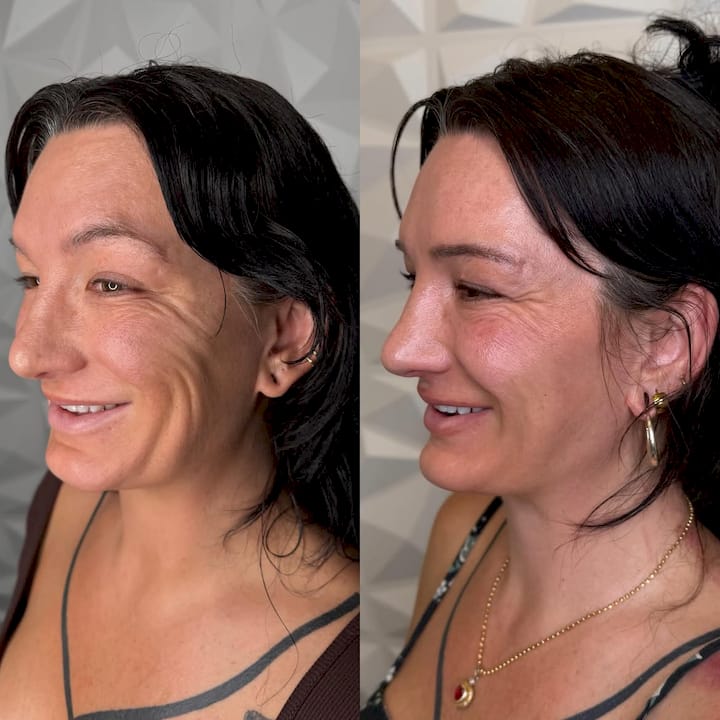
Yes, Botox and other botulinum toxin injections can effectively reduce dynamic bunny lines when placed at the correct muscle borders, and results usually show up within days and last for months. The key word is dynamic. If your bunny lines only show up when you scrunch your nose or laugh, this treatment tends to work well.
Here’s the quick version before we get into the anatomy and technique:
-
Typical dose range: Products vary. OnabotulinumtoxinA (Botox) and incobotulinumtoxinA (Xeomin) are often dosed in small unit amounts per side, while abobotulinumtoxinA (Dysport) numbers run higher due to differences in unit conversion.
-
Onset: Days to about 2 weeks, with full effect by roughly 1 month.
-
Duration: About 3 to 4 months on average.
-
Safety priority: Injections need to be superficial and placed high on the nasal sidewall. Go too low or too deep, and you risk affecting the muscles that lift your upper lip.
We’ll walk through exactly where those injections go and why placement, not just dose, determines whether your bunny lines botox results look natural.
Key Takeaways
Bunny lines botox works best when injections target the muscle borders bordering the crease rather than the crease itself, using conservative micro-dosing placed superficially and high on the nasal sidewall.
| Point | Details |
|---|---|
| Target the borders, not the crease | The visible fold often sits over a non-muscular zone; treating the surrounding muscle borders improves predictability. |
| Expect gradual, temporary results | Onset takes days to 2 weeks, with effects typically lasting 3 to 4 months before a touch-up is needed. |
| Product choice affects spread | Botox and Xeomin suit precise small-area dosing; Dysport spreads further and is dosed differently. |
| Watch for lip heaviness | Upper lip ptosis is the main risk specific to this area and is prevented with superficial, high placement. |
| Static lines need more than toxin | Deep, resting-state lines often require filler or resurfacing alongside neurotoxin. |
| The Injection Room uses a conservative, anatomy-first protocol | Treatment starts with movement mapping and conservative dosing, with a planned follow-up to refine results. |
Table of Contents
What Causes Bunny Lines in the First Place?
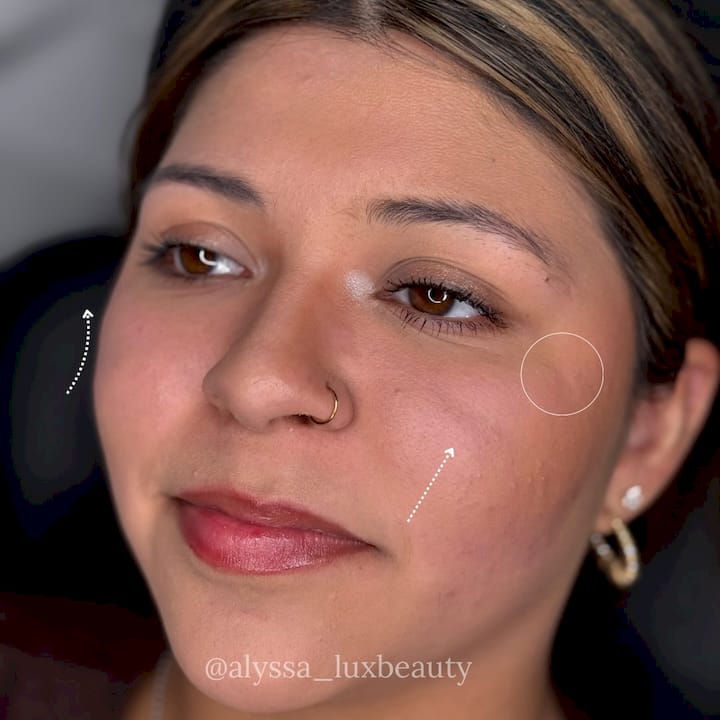
Bunny lines are those small diagonal creases that appear across the sides of your nose when you smile broadly, laugh, or scrunch your nose. They’re easy to miss at rest and impossible to miss the moment you animate your face.
The main culprit is the transverse nasalis, a thin muscle that runs across the bridge of the nose. When it contracts, it pulls the skin into those signature oblique folds. But nasalis rarely acts alone. The levator labii superioris alaeque nasi (LLSAN), procerus, and medial fibers of the orbicularis oculi frequently contribute, especially in people whose bunny lines extend upward toward the inner corner of the eye or downward toward the upper lip.
Here’s something most patients don’t realize: the crease itself often isn’t sitting directly over contracting muscle. Anatomical imaging studies have identified what researchers call the “bunny triangle,” a non-muscular zone that folds simply because the muscles bordering it are pulling from the sides. That distinction changes how a skilled injector approaches treatment.
-
Bunny lines are dynamic wrinkles, meaning they show up with movement rather than at rest.
-
Nasalis is the primary driver; LLSAN, procerus, and orbicularis oculi are secondary contributors depending on your facial anatomy.
-
Left untreated over years, repeated folding can convert dynamic lines into static ones etched into resting skin.
How Does Botulinum Toxin Actually Smooth These Lines?
Botulinum toxin works by blocking acetylcholine release at the motor endplate, the junction where a nerve signals a muscle to contract. Without that signal, the targeted muscle fibers relax, and the skin they were pulling into folds smooths out.
You won’t see results the moment you leave the treatment room. Most patients notice softening within about a week, with the full effect settling in by around 4 weeks. Duration then averages 3 to 4 months, though this varies based on your metabolism, muscle strength, and which product was used.
A pattern worth knowing: Patients who return for treatment every few months over a year or two sometimes notice their bunny lines botox appointments can be spaced further apart over time. Repeated relaxation of a muscle can lead to mild atrophy, meaning the nasalis simply doesn’t pull as hard as it used to.
A few practical implications follow from this:
-
Don’t expect a permanent fix after one session. Bunny lines botox is a maintenance treatment, not a cure.
-
Plan for touch-ups roughly every 3 to 4 months initially.
-
If you’re consistent with treatment, your injector may be able to stretch that interval as muscle activity diminishes.
Where Injectors Actually Place the Needle
This is where a lot of confusion happens, and where the difference between a mediocre result and a natural one gets decided. The instinct is to inject directly into the visible crease. That instinct is usually wrong.
Because the crease often sits over the bunny triangle rather than over active muscle, injecting straight into the line can miss the actual source of the pull and increase the risk of the toxin spreading somewhere it shouldn’t. Border-targeted technique, placing small amounts at the muscle margins that create the fold, tends to produce more predictable, natural-looking results.
Here’s what that looks like in practice:
-
Superior border of the transverse nasalis: This is the primary target for most patients, placed along the upper edge of the muscle rather than in the crease itself.
-
Micro-aliquots near LLSAN and medial orbicularis oculi: Used cautiously, and only when these muscles are visibly contributing to the pattern during animation.
-
Low-dose procerus margin: Considered when glabellar (frown line) muscle pull extends down into the nasal root.
Depth matters as much as location. Injections should stay superficial, typically around 1.5 to 2.0 millimeters, and placed high on the nasal dorsum and lateral sidewall. Go lower or deeper, and the toxin risks diffusing into the muscles that elevate your upper lip, which is the single most common complication associated with this treatment.
Dosing at each point is conservative by design. Most protocols use micro-aliquots of roughly 1 to 2 units per point, using low-volume, high-concentration formulations to limit how far the product spreads once injected. An experienced injector also watches for the angular artery in this region, since the nose has more vascular traffic than people assume.
Pro Tip: A good injector won’t just eyeball your nose at rest. They’ll ask you to scrunch and smile repeatedly, marking exactly where the muscle borders contract before ever picking up the needle. In more complex cases involving prior treatments or unusual anatomy, some clinics use ultrasound guidance to confirm muscle depth and location before injecting.
Dosing by Product: Botox, Dysport, and Xeomin Compared
Not all botulinum toxin products behave the same way once injected, and the differences matter more for a small, precise area like the nose than they might for a larger muscle group like the forehead.
OnabotulinumtoxinA (Botox) and incobotulinumtoxinA (Xeomin) are typically favored for bunny lines because their formulation allows for tight, small-volume dosing that stays where it’s placed. AbobotulinumtoxinA (Dysport) has a documented tendency to spread further from the injection point, which some injectors use to their advantage for broader areas but approach more cautiously around the nose.
| Product | Typical Dose (per side) | Spread Tendency | Common Use Case |
|---|---|---|---|
| OnabotulinumtoxinA (Botox) | Small-volume micro-aliquots, often 1 to 4 U total | Low | Precise, small-area placement |
| IncobotulinumtoxinA (Xeomin) | Comparable small-volume dosing to Botox | Low | Precise, small-area placement |
| AbobotulinumtoxinA (Dysport) | Reported in ranges of 10 to 20 U for bunny lines in some studies | Higher | Broader coverage when spread is desired |

Unit numbers between these products aren’t interchangeable. A “20 unit” Dysport treatment isn’t four times stronger than a “5 unit” Botox treatment; it reflects a different unit conversion standard entirely. This is why comparing bunny lines botox costs or effectiveness across products by unit count alone is misleading.
A few practical notes on results:
-
Onset and duration are broadly similar across all three products: days to 2 weeks for onset, 3 to 4 months for duration.
-
Repeated treatment can shift the interval longer over time as muscle bulk decreases.
-
Touch-ups, when needed, are typically scheduled 2 to 3 weeks after the initial session once full effect has settled in, rather than immediately.
Side Effects and How Injectors Prevent Them
Most patients experience nothing more than mild bruising or tenderness at the injection sites, which resolves within a few days. That’s the routine, expected part of any Botox treatment.
The complication patients should actually understand before booking is upper lip ptosis, a temporary drooping or heaviness of the upper lip that occurs if toxin diffuses into the LLSAN or other lip elevator muscles nearby. It’s uncommon with proper technique but is the defining risk specific to this treatment area. Less common still are diplopia (double vision) or eyelid heaviness from unintended spread toward the orbit, along with asymmetry if muscle activity wasn’t mapped accurately beforehand.
Prevention comes down to a handful of deliberate choices:
-
Keeping injections superficial and positioned high on the nasal sidewall rather than low or deep.
-
Using micro-aliquots at precise concentration rather than larger, more dilute volumes.
-
Starting conservatively on a first visit, then adjusting dose at a follow-up rather than overcorrecting immediately.
-
Mapping active muscle borders with the patient animating before the first injection is placed.
If something feels off after treatment, whether that’s unusual heaviness in the lip or asymmetric movement, contact your injector promptly or learn more about Tallahassee Botox for expert care. Most diffusion-related effects are transient and resolve as the toxin’s peak effect passes. True functional complications are rare and, when they occur, may warrant evaluation by a specialist.
Are You a Good Candidate for This Treatment?
The best candidates have bunny lines that appear primarily with expression rather than sitting etched into resting skin. If your lines vanish when your face is relaxed, you’re likely dealing with dynamic lines that respond well to neurotoxin.
A few practical checks before booking:
-
Your bunny lines show up mainly with smiling, laughing, or nose scrunching, not at rest.
-
Your skin is generally healthy with no active infection at the injection sites.
-
You understand this is a temporary improvement requiring maintenance, not a one-time fix.
Certain situations call for a pause and a conversation with your provider first: pregnancy or breastfeeding, neuromuscular disorders, or certain medications that affect neuromuscular function. A thorough consultation and medical history review should happen before any injection, which is standard practice regardless of where you go for treatment.
As for whether bunny lines botox is worth it: for dynamic lines, or to prevent dynamic lines from becoming permanently etched, it’s one of the more efficient treatments in aesthetic medicine given how small and localized the treatment area is. Static lines that persist at rest often need more than a neurotoxin, which we’ll cover next. Cost depends on your provider’s experience, the number of units used, and your specific anatomy, so think in terms of value against your goals rather than chasing the lowest price you can find.
When Fillers or Skin Treatments Make More Sense
Botox handles muscle movement. It doesn’t add volume, and it doesn’t fix skin texture that’s already thinned or creased from years of sun exposure and repeated folding.
If your bunny lines have become static, meaning they’re visible even when your face is completely relaxed, hyaluronic acid filler or resurfacing treatments often need to enter the conversation alongside or instead of neurotoxin. Choosing between Botox and fillers usually comes down to whether the problem is muscle movement or lost structure and skin quality.
For skin that’s thinned or crepey around the nose, microneedling or gentle chemical peels can improve texture over a series of sessions. A common sequencing approach: treat the dynamic component with neurotoxin first, let it settle over 2 to 3 weeks, then layer in filler or a resurfacing treatment if static lines or volume loss remain. If you’re dealing with lines elsewhere on the face too, comparing your full range of options before committing to one approach tends to produce a more cohesive result than treating each area in isolation.
What Sets a Skilled Injector Apart Here
Bunny lines are a small, unforgiving treatment area. A millimeter of placement error matters more here than it does on a forehead with more surface area to work with.
At The Injection Room, that starts with a dynamic facial assessment before any needle comes out. We ask you to scrunch, smile, and animate so we can mark exactly where your muscles are pulling, rather than guessing based on where the crease happens to sit. First treatments are dosed conservatively, with a planned follow-up window to fine-tune results rather than overcorrecting on day one.
-
Anatomy-based technique that treats muscle borders, not just the visible line.
-
Individualized dosing based on your specific nasalis strength and secondary muscle contribution.
-
Documented units and outcomes at each visit, so your treatment plan improves with every session. Our approach draws on the same conservative dosing principles we apply across every neurotoxin treatment we offer.
A Note on Getting This Right the First Time
Natural results come from restraint, not maximum dosing. Our approach starts low, reassesses with animation at follow-up, and adds skin-quality treatments only when the muscle work alone won’t get you there. Bunny lines respond well to patience, not aggression.
Ready to Talk About Your Bunny Lines?
If you’ve read this far, you already know more about bunny lines botox technique than most people walking into a consultation. That’s exactly the kind of informed conversation we want to have with you. A consult at The Injection Room includes movement mapping while you animate, a specific treatment plan based on your anatomy, quoted units before you commit to anything, and a clear follow-up window built in from the start.
We also treat crow’s feet, forehead lines, and other expression lines using the same border-targeted approach, so if bunny lines aren’t your only concern, that’s a conversation worth having too. And if your skin quality needs attention alongside muscle relaxation, we offer microneedling to address texture as part of a combined plan.
Ready to see what a conservative, anatomy-first treatment plan looks like for your face? Book a neurotoxin consultation in San Antonio or explore our full range of Botox, Dysport, and Xeomin options to find the right fit for your goals.
Sources
-
Botulinum Toxin Treatment of the Upper Face - StatPearls - NCBI Bookshelf
-
Novel Anatomical Guidelines on Botulinum Neurotoxin Injection for Wrinkles in the Nose Region
This article is general information, not a substitute for advice from a qualified doctor. Consult a qualified healthcare professional about your own circumstances before acting on anything here.
FAQ
What Does Botox Do for Bunny Lines?
It relaxes the nasalis and neighboring muscles that pull the nasal sidewall skin into diagonal creases when you smile or scrunch your nose, smoothing the appearance of dynamic bunny lines.
How Much Does Botox Cost for Bunny Lines?
Cost depends on the number of units used, your provider’s experience, and your specific anatomy rather than a fixed price, so it’s best discussed during a consultation where your treatment plan is mapped out.
Is Bunny Line Botox Worth It?
For dynamic lines that show up mainly with expression, most patients find it a worthwhile, low-commitment treatment since it’s fast, localized, and prevents lines from becoming permanently etched over time.
Do Bunny Lines Go Away on Their Own?
Dynamic bunny lines fade at rest but return with movement unless treated; left alone for years, repeated folding can eventually make them visible even when your face is relaxed.


%20Pictures%20are%204%20weeks%20apart..jpg)