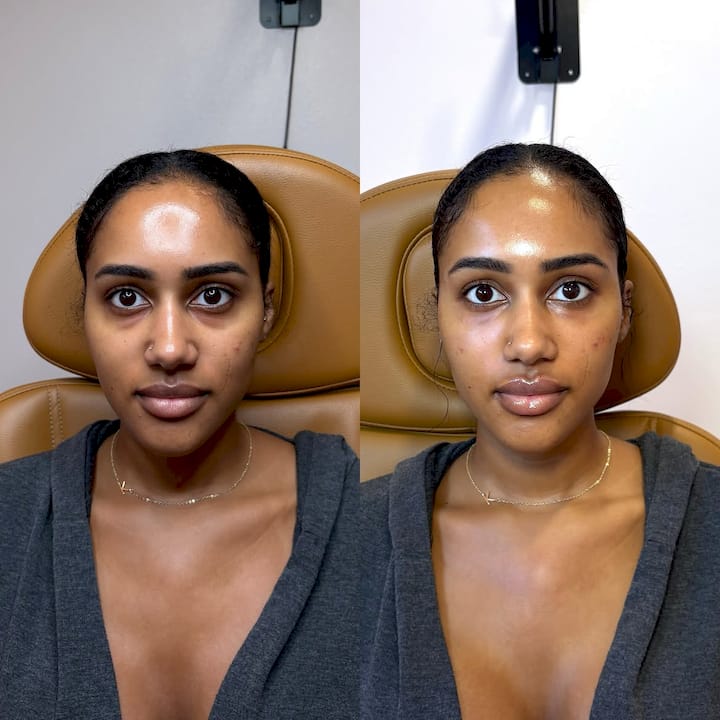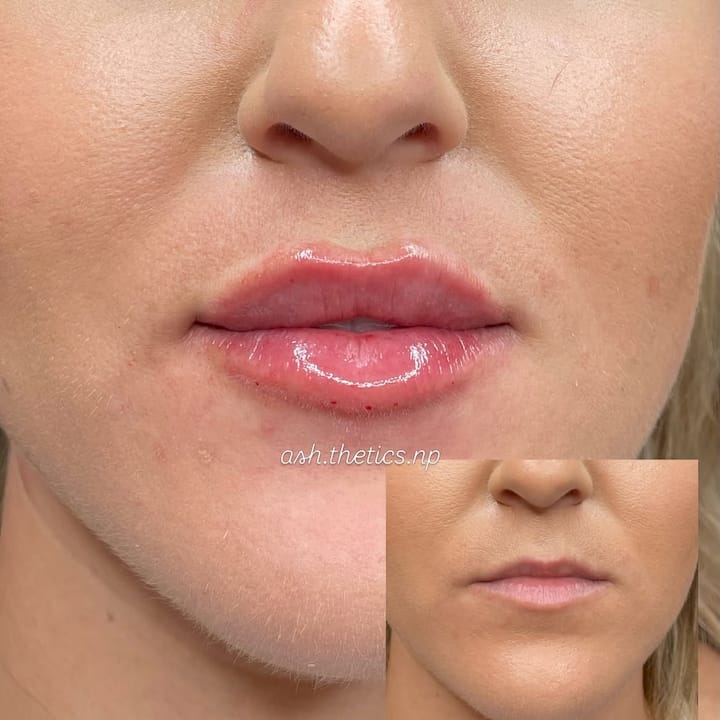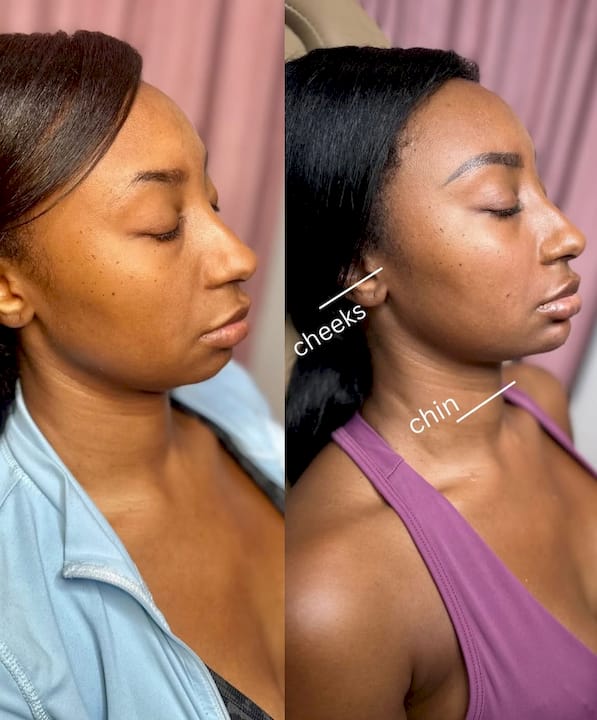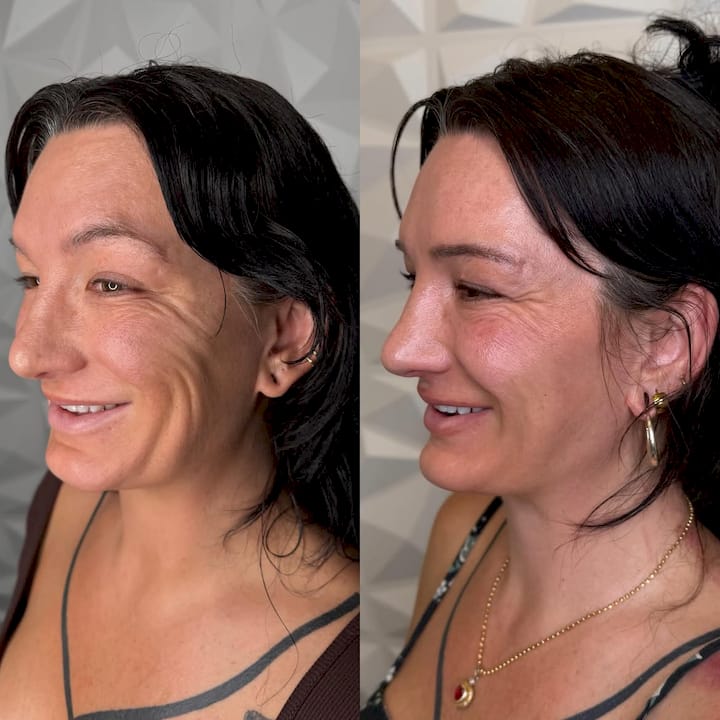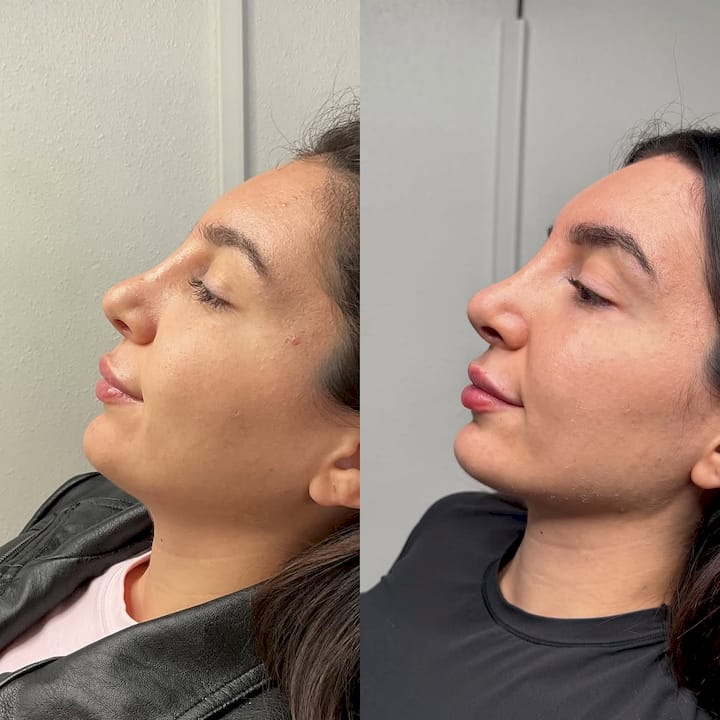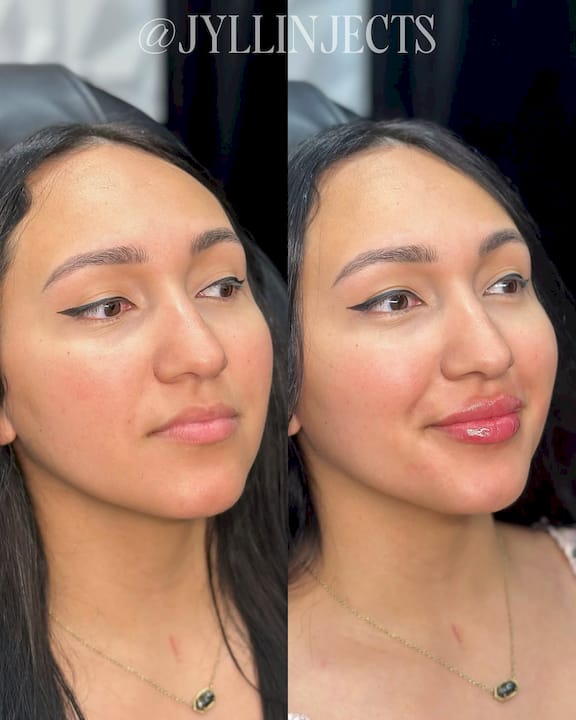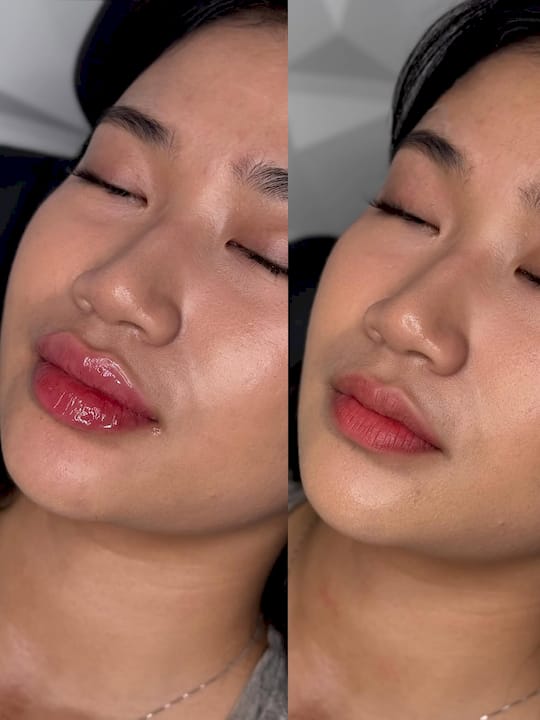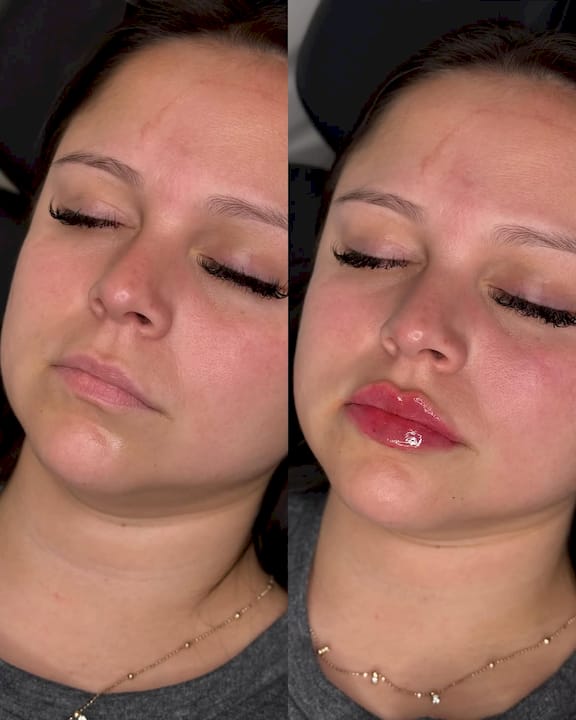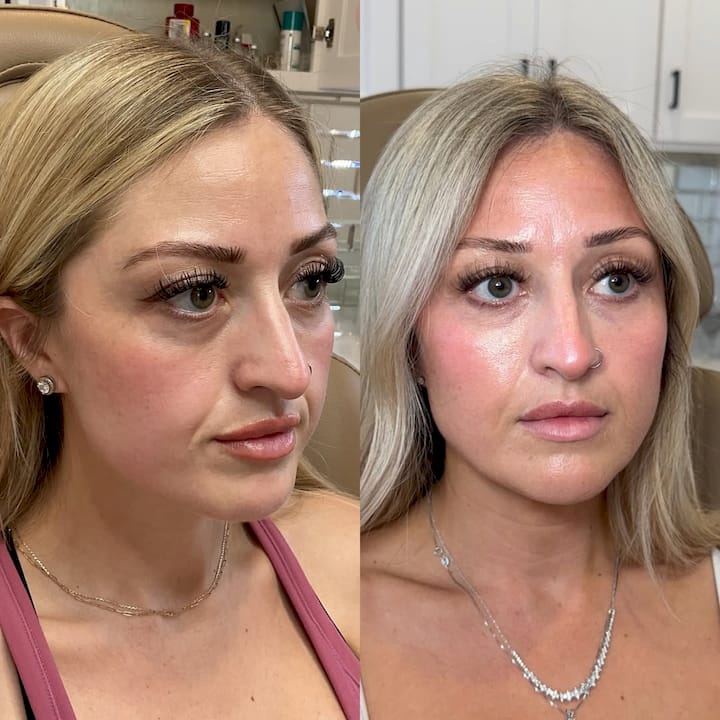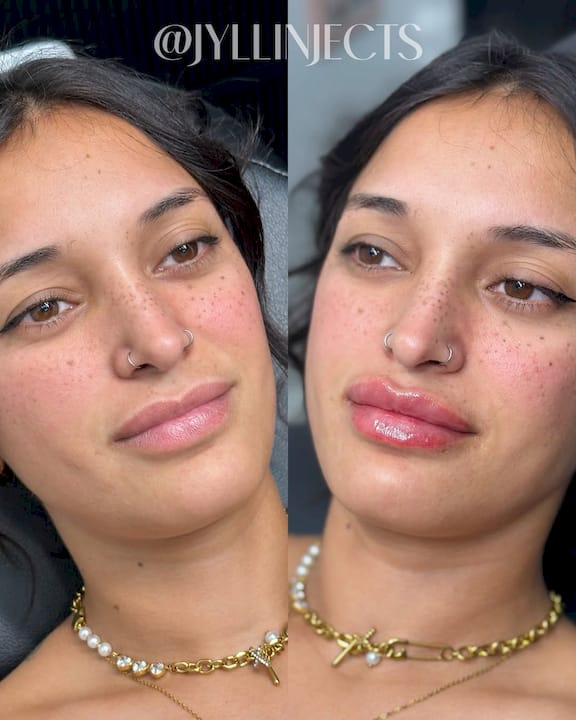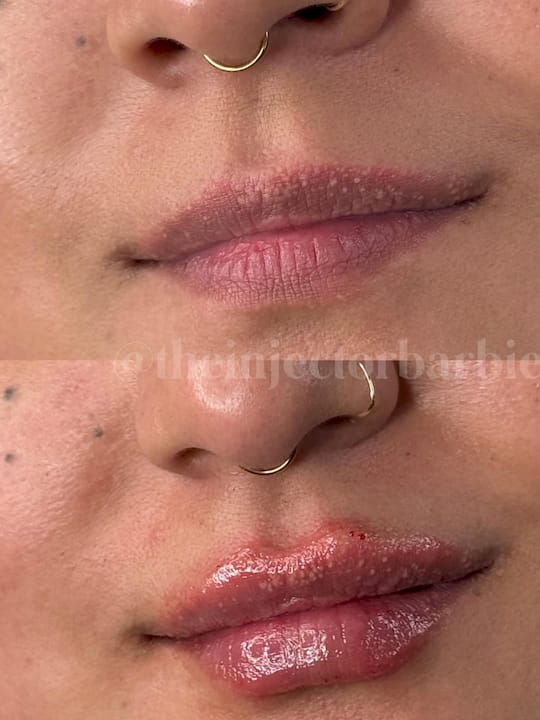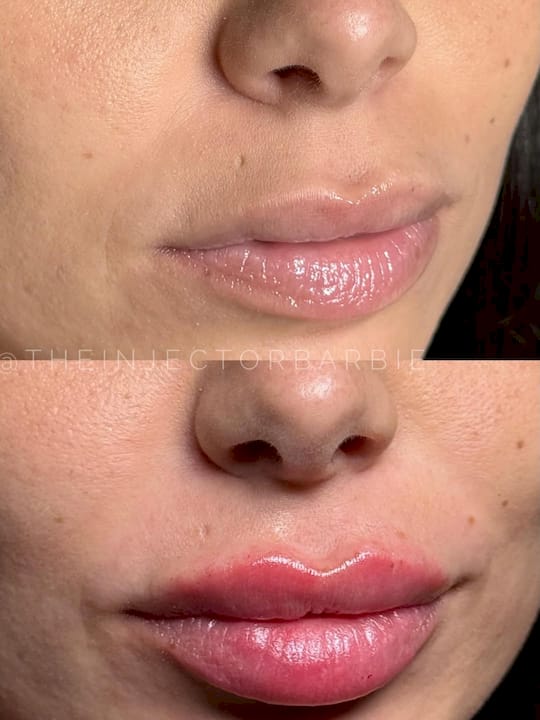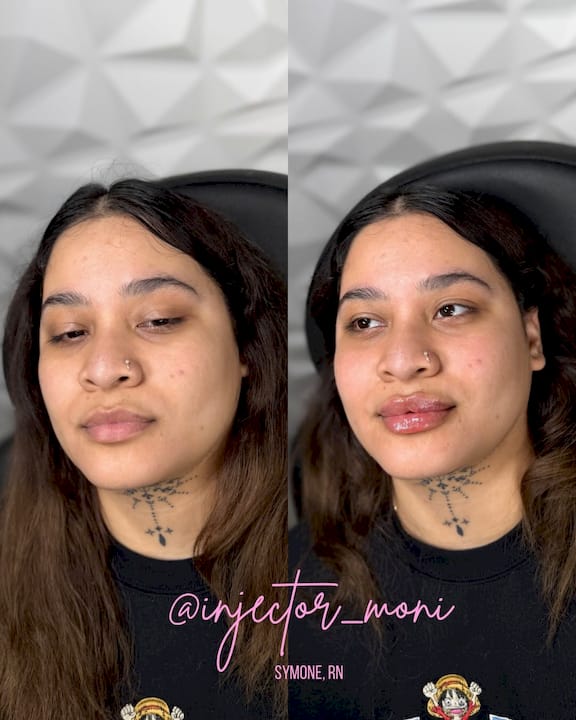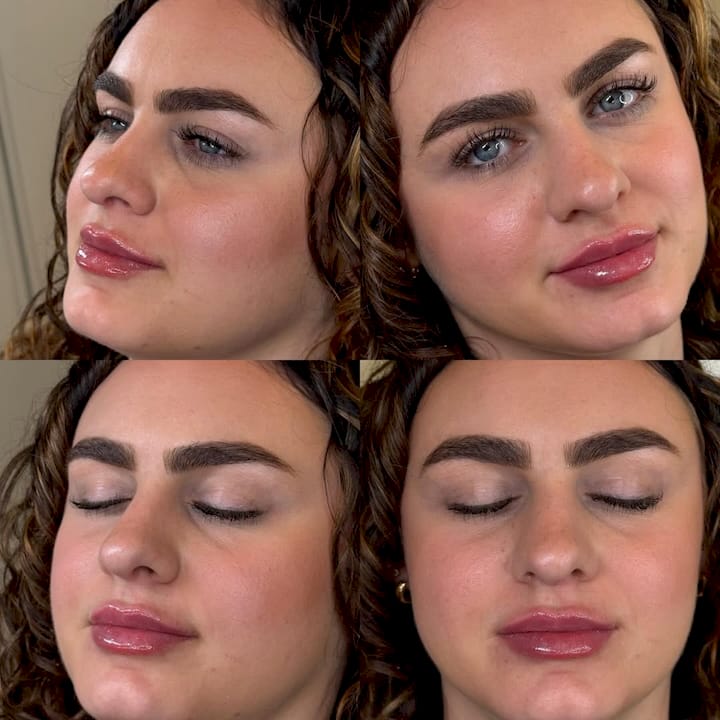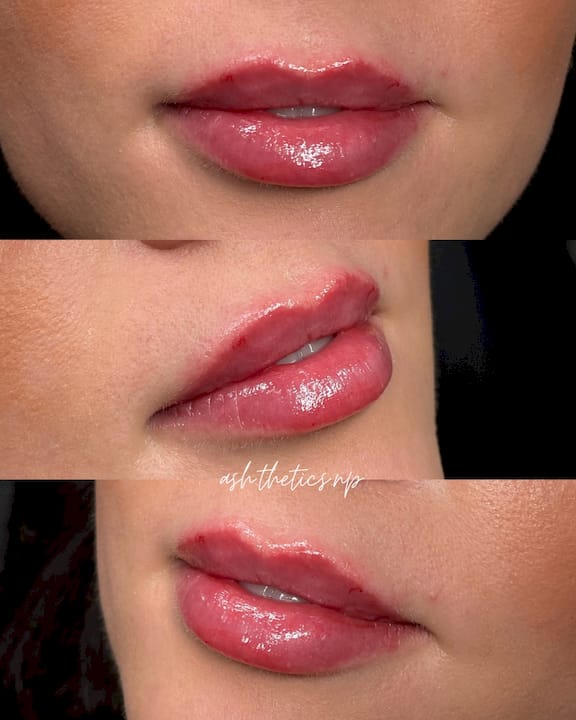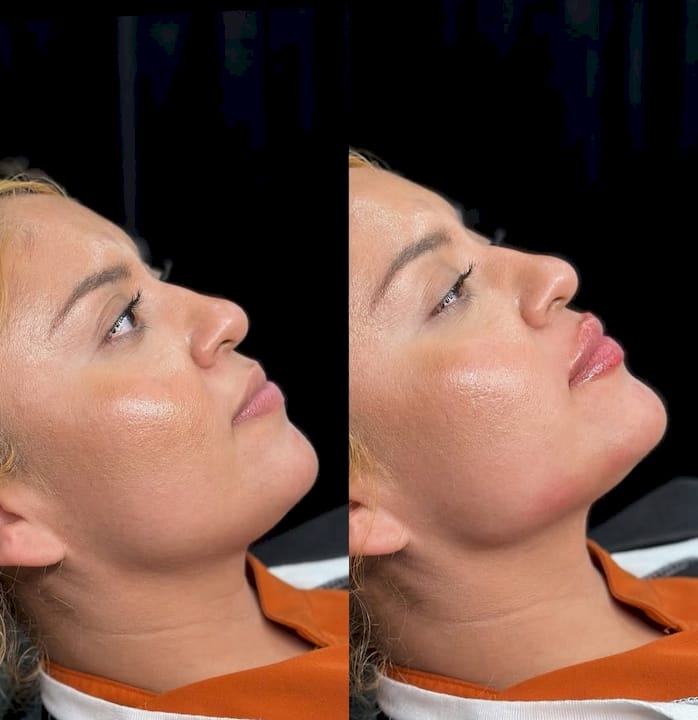
Jawline filler adds targeted soft-tissue volume and structural support along the mandibular border to create sharper contour, reduce jowling, and improve lower-face definition without surgery. Results are visible immediately, though final contour settles over a few weeks as swelling resolves. The treatment changes soft tissue, not bone structure, and choosing a qualified, anatomy-trained injector is the single most important safety decision you will make.
Primary outcomes you can expect:
-
Sharper, more defined mandibular angle and border
-
Clearer separation between the jawline and neck
-
Reduced appearance of jowls and sagging skin
-
Improved facial symmetry and balance
-
A subtle slimming effect on the lower face
One safety note upfront: rare but serious vascular complications, including tissue damage and vision changes, are documented. Provider skill and emergency preparedness matter enormously.
Table of Contents
What is jawline filler and who typically gets it?
Jawline filler is a nonsurgical dermal injection that places gel-like material under the skin along the lower face to add volume, restore contour, and sharpen the mandibular line. The FDA recognizes jawline augmentation as an approved indication for certain dermal filler devices, which matters when you are evaluating a clinic’s product choices.
People seek this treatment for two distinct reasons: aging and genetics. Patients in their 30s and 40s often notice jowling and loss of the crisp jaw-to-neck angle that comes with collagen decline and fat redistribution. Younger patients sometimes pursue it to strengthen a naturally soft or recessed jaw. Either way, the goal is the same: sharper mandibular angle, clearer jawline-neck separation, reduced jowls, and improved symmetry.
Not everyone is a candidate. Contraindications include pregnancy, active skin infection at or near the injection site, certain autoimmune conditions, and bleeding disorders. Set realistic expectations going in: results are temporary, maintenance is likely, and fillers reshape soft tissue, not bone. If you are hoping for a surgical-level structural change, a consultation with a board-certified plastic surgeon for implant options is worth exploring alongside this route.
How does jawline filler actually create definition?
The mechanism is straightforward. Filler placed at the right depth adds structural support under the skin, re-establishing the mandibular line and filling the prejowl sulcus (the hollow just in front of the jowl) that makes sagging more visible. That support lifts and projects tissue outward, creating the crisp border most patients are after.
Injection depth varies by goal:
-
Supraperiosteal placement (just above the bone) provides the firmest structural support at the mandibular angle
-
Subdermal placement blends and smooths along the body of the jaw
-
Subcutaneous placement addresses surface irregularities and fine-tunes contour
The lower face is anatomically complex. The facial artery, marginal mandibular nerve, and several other critical structures run through this region. Placement errors can compress or enter vessels, which is why technique and anatomy knowledge are not optional extras. Jaw fillers can provide subtle to significant contouring depending on placement and volume, but that range cuts both ways: more volume in the wrong plane creates problems, not definition.
Which filler materials work best for the jawline?
Four material categories are used for jawline augmentation, each with a different risk and durability profile.
Hyaluronic acid (HA) is the most commonly used starting point. It integrates naturally with tissue, provides good projection, and most importantly, can be dissolved with hyaluronidase if a complication occurs or you simply want the result reversed. The FDA confirms that HA reversibility is a key safety advantage over non-HA options. Results typically last up to 18 months depending on the specific product and placement depth.
Calcium hydroxylapatite (CaHA) is a thicker, firmer material that provides strong structural lift. It stimulates collagen over time, which can extend results beyond what HA alone delivers. It is not reversible with hyaluronidase, so the risk-benefit calculation changes.
Poly-L-lactic acid (PLLA) works differently: it stimulates your own collagen gradually over several months rather than adding immediate volume. It suits patients who want a progressive, natural-looking improvement and are comfortable with a multi-session approach.
Polymethylmethacrylate (PMMA) is a semi-permanent option. Results last years, but so do complications if they arise. Removal is difficult or impossible, which is why most experienced injectors reserve it for very specific cases and counsel patients extensively before proceeding.
For most patients, HA fillers are the logical first choice because reversibility protects you if something goes wrong. Our injectors at Theinjectionroom discuss all material options during consultation so you understand exactly what is going in and what the plan is if you want it out. For a deeper look at specific product options, our guide on jawline filler types walks through seven categories with practical selection tips.
What to expect before, during, and after your appointment
Most jawline filler appointments take under an hour and deliver visible contour change the same day, with some immediate swelling that temporarily exaggerates the result.
Before your appointment:
-
Disclose all medications, especially blood thinners, NSAIDs, and supplements like fish oil or vitamin E, which increase bruising risk
-
Avoid alcohol for 24 hours beforehand
-
Schedule around dental work and vaccinations: systemic events like dental procedures can trigger delayed inflammatory reactions at filler sites months later, so timing matters
-
Share your full medical history, including any previous filler treatments and where they were placed
-
Bring reference photos if you have a specific contour goal in mind
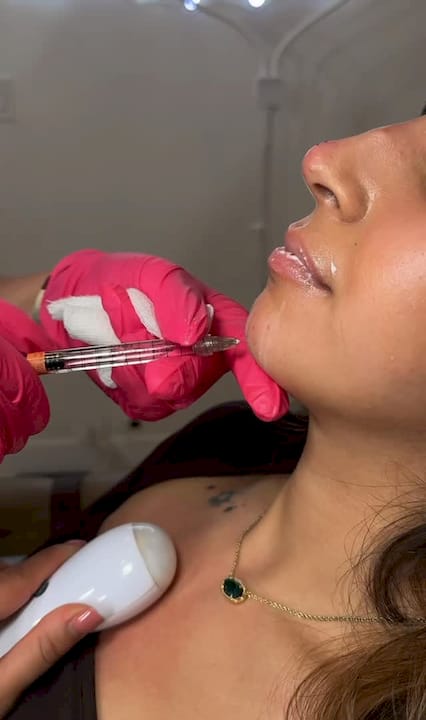
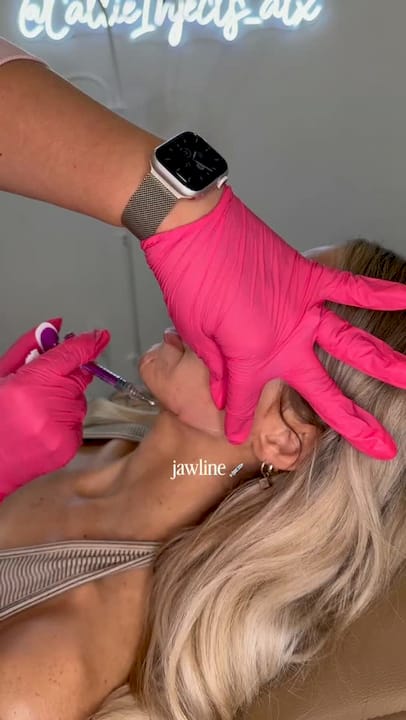
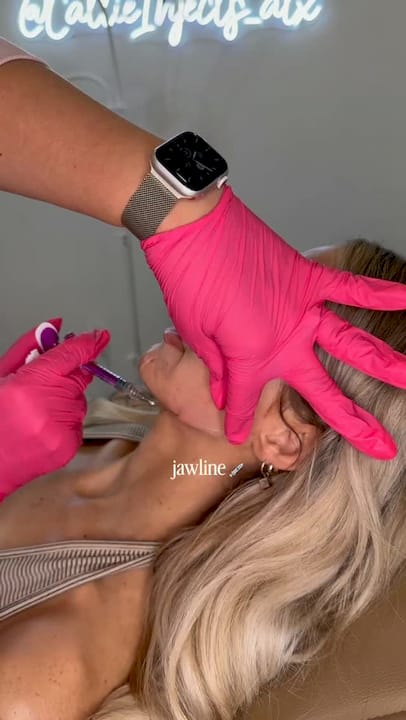
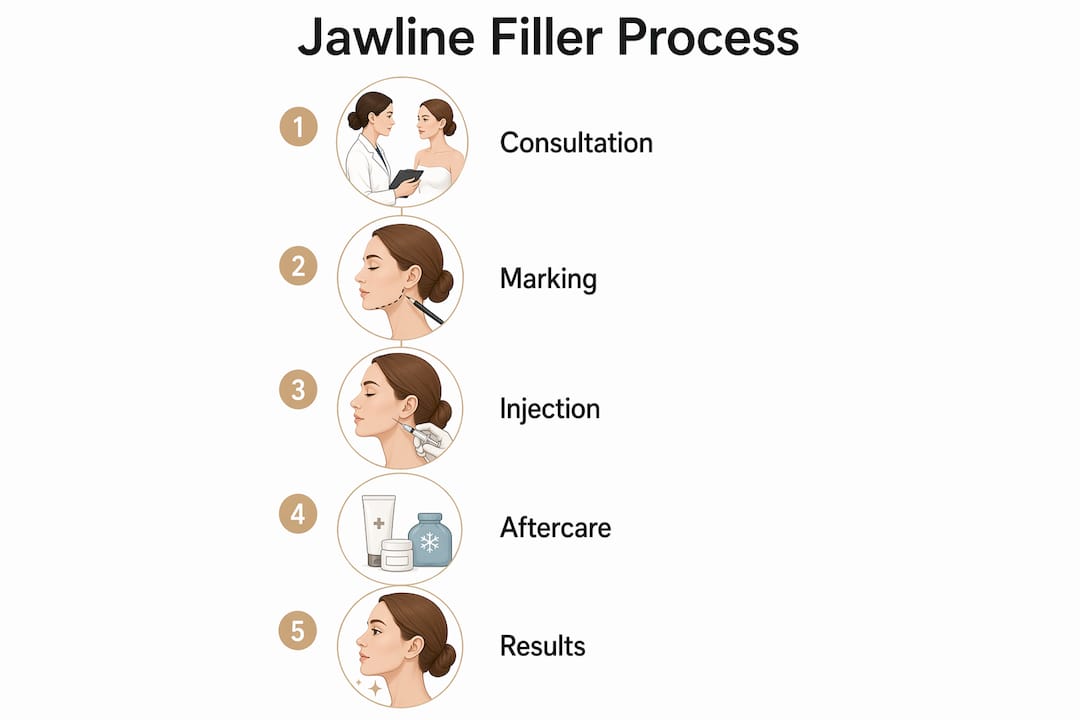
During the appointment, your injector will mark the treatment zones, discuss anesthesia options (topical numbing cream is standard; some products contain lidocaine), and use a combination of needle and cannula techniques. Deep bolus injections at the mandibular angle provide structural support; cannula-based blending along the jaw body smooths the transition. Syringe count varies by individual anatomy, typically ranging from 1–3 syringes for a first treatment, though your injector will assess your specific needs.
After the appointment, expect swelling and mild bruising for 3–7 days. Avoid strenuous exercise, heat exposure, and facial massage for 24–48 hours. Our step-by-step dermal filler guide covers the full recovery timeline in detail.
Pro Tip: Wait at least two weeks before judging your final result. Swelling can make the jawline look overfilled initially. Photos taken at two weeks and again at six weeks give you the clearest before-and-after comparison.
How long do results last, and what affects longevity?
Results from jawline filler are visible immediately and improve further as swelling resolves over 2–4 weeks. Final contour is typically stable by the 4–6 week mark.
| Filler type | Typical duration | Notes |
|---|---|---|
| Hyaluronic acid (HA) | 6–18 months | Varies by product viscosity and placement depth |
| Calcium hydroxylapatite (CaHA) | 12–18 months | Collagen stimulation may extend effect |
| Poly-L-lactic acid (PLLA) | 18–24 months | Gradual onset; multiple sessions usually needed |
| PMMA | Several years | Semi-permanent; difficult to reverse |
A pivotal multicenter trial of the HA filler VYC-25L showed objective improvements in jawline definition sustained through 12 months, giving patients and clinicians a reliable evidence benchmark for HA performance.
Several factors shorten or extend how long your results hold. Higher metabolism tends to break down HA faster. Placement depth matters too: supraperiosteal injections generally last longer than superficial ones because the material is less subject to movement and muscle activity. Sun exposure, smoking, and significant weight fluctuation all accelerate breakdown. Many patients schedule maintenance sessions within about a year to preserve the result before it fades.
What are the risks and side effects you should know about?
The FDA documents two tiers of risk for dermal fillers: common and manageable, and rare but serious.
Common side effects (usually resolve within days to two weeks):
-
Swelling and puffiness at injection sites
-
Bruising, especially along the jawline where vessels are closer to the surface
-
Tenderness and firmness at treated areas
-
Temporary redness
Rare but serious complications require immediate attention:
-
Vascular occlusion: filler injected into or compressing a blood vessel can cause tissue necrosis (skin death), vision loss, or stroke. These are rare but documented, and they are why provider skill is non-negotiable.
-
Infection: any injection carries infection risk; sterile technique and proper aftercare minimize it
-
Nodules and granulomas: firm lumps that can develop weeks to months after treatment, sometimes requiring treatment with hyaluronidase or corticosteroids
-
Delayed inflammatory reactions: systemic triggers such as viral illness, vaccinations, or dental procedures can activate inflammation at filler sites months after injection
A comprehensive review of filler adverse effects confirms that many serious complications are linked to technique errors and insufficient anatomy knowledge, not the products themselves.
Warning signs that need urgent attention: sudden skin color changes (white or blue patches), severe pain disproportionate to the procedure, vision changes, or rapidly spreading redness. Contact your injector immediately, and go to an emergency room if vision is affected.
How do you find a qualified injector? A practical checklist
Provider skill and anatomy knowledge matter more than the product name on the syringe. The American Board of Cosmetic Surgery is direct about this: vascular compromise and other severe events are frequently linked to improper technique rather than the filler itself.
Before you book, verify:
-
Clinician holds a medical license (MD, DO, NP, PA, or RN) with documented training in facial injectables
-
Injector has specific experience with lower-face and jawline anatomy, not just lip or cheek work
-
Clinic has hyaluronidase on-site and a documented emergency protocol
-
Before-and-after photos show jawline cases, not just lips or cheeks
-
Medical history intake is thorough and includes questions about previous fillers, medications, and recent dental or medical procedures
Questions to ask at your consultation:
-
What technique do you use for jawline support (needle vs. cannula, injection depth)?
-
How many syringes do you anticipate for my anatomy?
-
What happens if I develop a complication, and do you have hyaluronidase available?
-
Is the product you are using HA-based and reversible?
Walk away if: the clinic skips a medical history intake, pressures you to use more volume than you asked about, or cannot clearly explain their complication management plan.
A pivotal trial of VYC-25L showed an 89% responder rate at Month 6 by investigator assessment, which tells you that in the hands of trained injectors using appropriate products, high satisfaction is achievable. That result depends on the injector as much as the product. For guidance on what natural, well-executed results look like, our resource on natural-looking fillers is worth a read before your consultation.
Key Takeaways
Jawline filler works by adding structural soft-tissue support along the mandibular border, and choosing a qualified, anatomy-trained injector is the most important safety decision in the entire process.
| Point | Details |
|---|---|
| What it does | Adds volume and structural support to sharpen the mandibular border and reduce jowling. |
| Best material for most patients | Hyaluronic acid fillers are preferred for first treatments because they are reversible with hyaluronidase. |
| How long results last | HA fillers typically last 6–18 months; CaHA and PLLA can extend to 18–24 months. |
| Provider selection is safety | Vascular complications are linked to technique errors; verify credentials, anatomy experience, and emergency protocols before booking. |
| Theinjectionroom | Offers jawline filler consultations in Austin and San Antonio, TX, with individualized planning and a safety-first approach. |
Why technique matters more than most patients realize
The conversation around jawline filler tends to focus on product choice, and that is understandable. But in practice, the technique your injector uses determines your result far more than which brand of HA is in the syringe.
The approach we use at Theinjectionroom combines deep supraperiosteal bolus injections for structural support at the mandibular angle with cannula-based blending along the jaw body. That combination does two things: it creates the structural lift that defines the angle, and it reduces vascular risk by minimizing sharp-needle passes near critical vessels. Individualized planning is not a marketing phrase here. It means assessing your face shape, your existing bone structure, and how much soft-tissue laxity you have before deciding on placement depth, volume, and product. Overfilling the jawline is one of the most common mistakes in lower-face work, and it produces an artificially squared appearance that looks nothing like natural anatomy. Less volume, placed precisely, almost always outperforms more volume placed broadly. Patients who come in asking for “a strong jawline” often leave happiest when we use a conservative first session and reassess at six weeks. Trust the process on that one.
Jawline filler at Theinjectionroom in Austin and San Antonio, TX
If you are ready to move from research to results, Theinjectionroom offers jawline filler consultations at our Austin and San Antonio, TX locations. Every appointment starts with a thorough anatomy review and a conversation about your goals, not a one-size-fits-all treatment plan. We use HA-based fillers as our first-line choice for jawline work because reversibility matters, and we keep hyaluronidase on-site at every session. Our injectors are trained in lower-face anatomy and use a combined deep-support and cannula-blending technique to minimize vascular risk and deliver natural contour. Whether you are exploring jawline definition for the first time or looking to maintain a previous result, we will build a plan around your face, not a template. You can also explore our non-surgical nose job service if you are considering full midface and lower-face contouring together. Book a consultation with Theinjectionroom to get a personalized assessment and a clear picture of what jawline filler can realistically do for you.
Useful sources and further reading
-
FDA: Dermal filler safety, approved indications, and consumer guidance
-
FDA: Dermal fillers and material types, including reversibility
-
FDA bulletin: Delayed inflammatory reactions linked to systemic triggers
-
Cleveland Clinic: Jawline filler overview and patient expectations
-
PMC: VYC-25L pivotal trial — clinical outcomes for jawline restoration
-
PMC: Review of adverse effects associated with dermal filler treatments
-
American Board of Cosmetic Surgery: Injectable fillers overview
This article is general information, not medical advice. Consult a licensed medical professional to determine whether jawline filler is appropriate for your specific situation and health history.
%20Pictures%20are%204%20weeks%20apart..jpg)