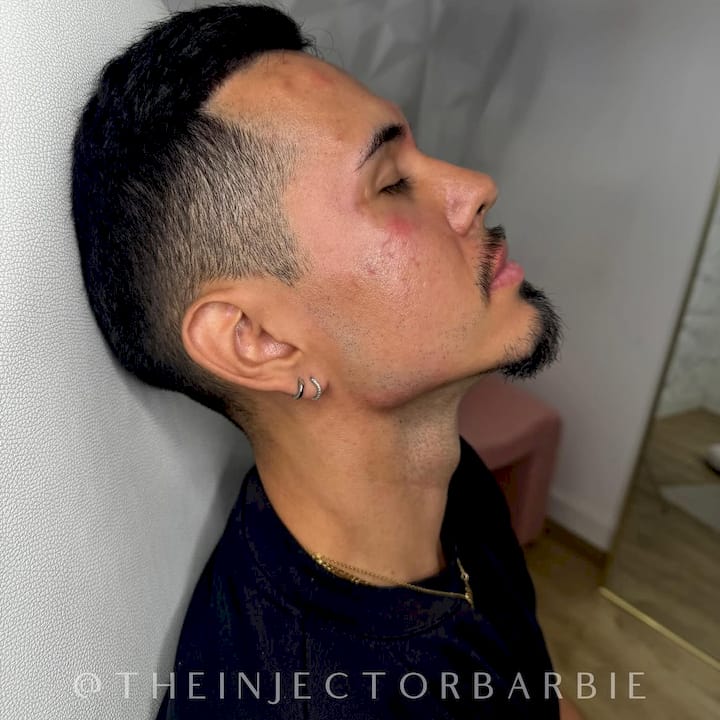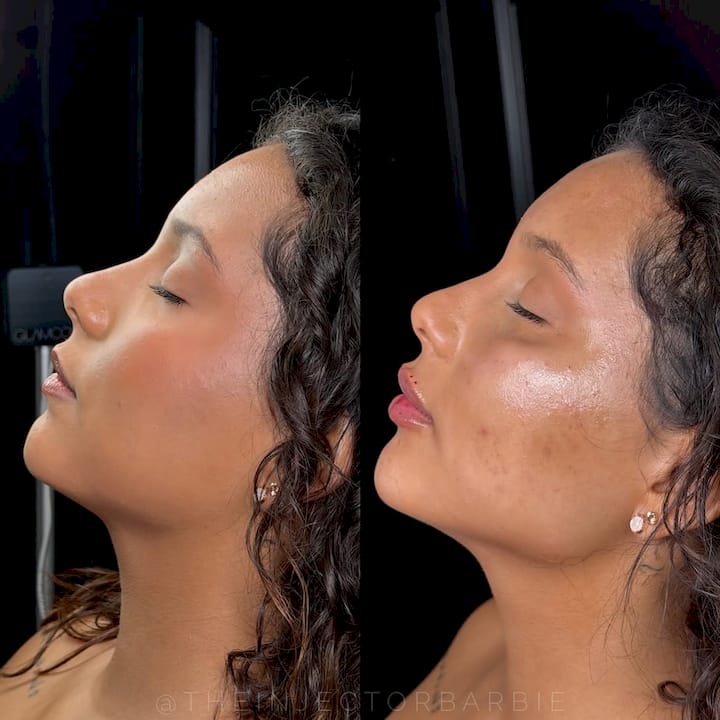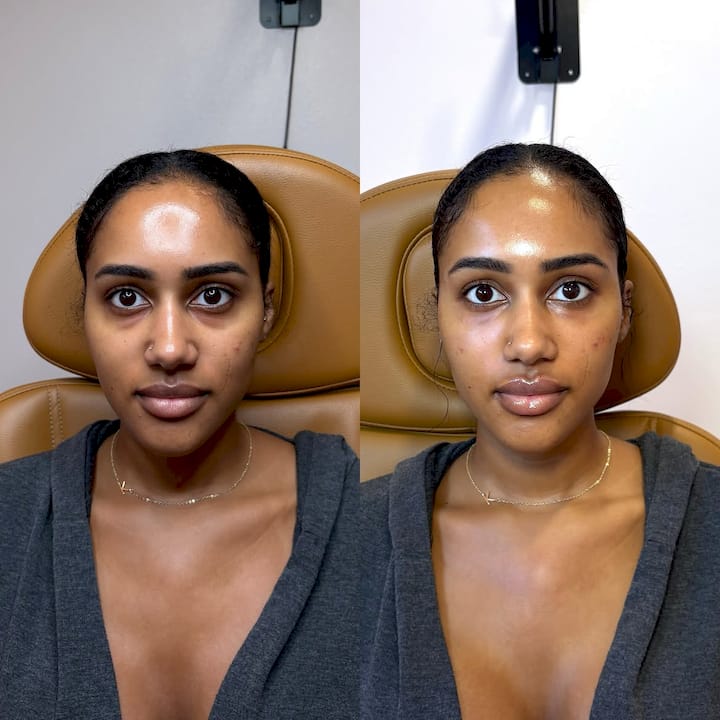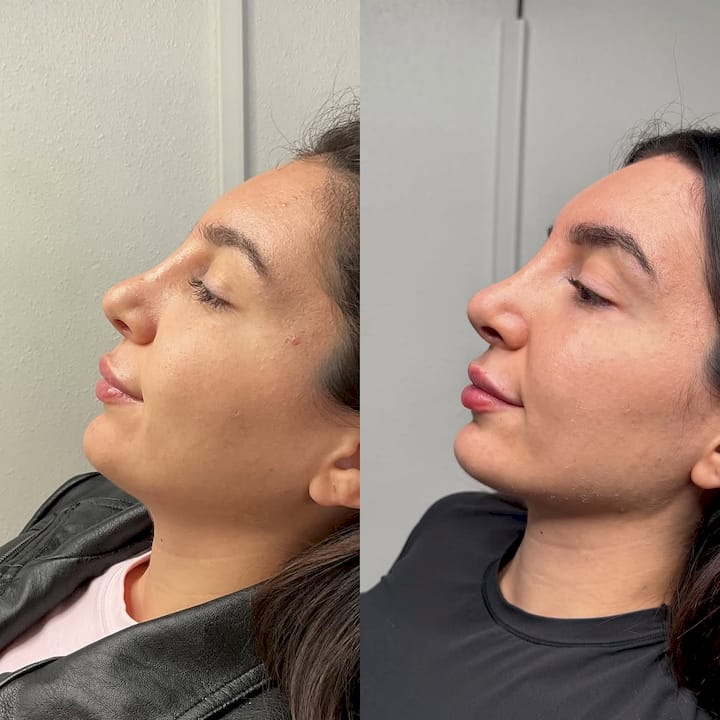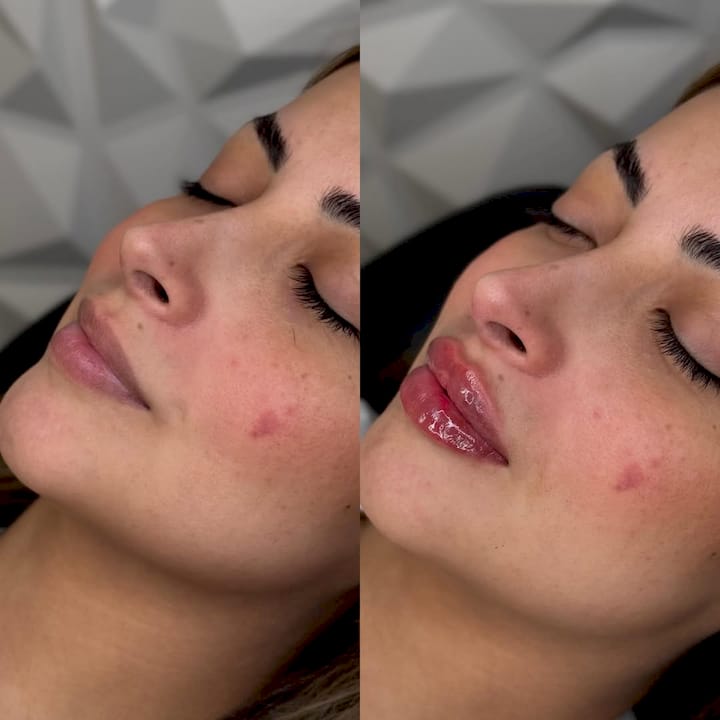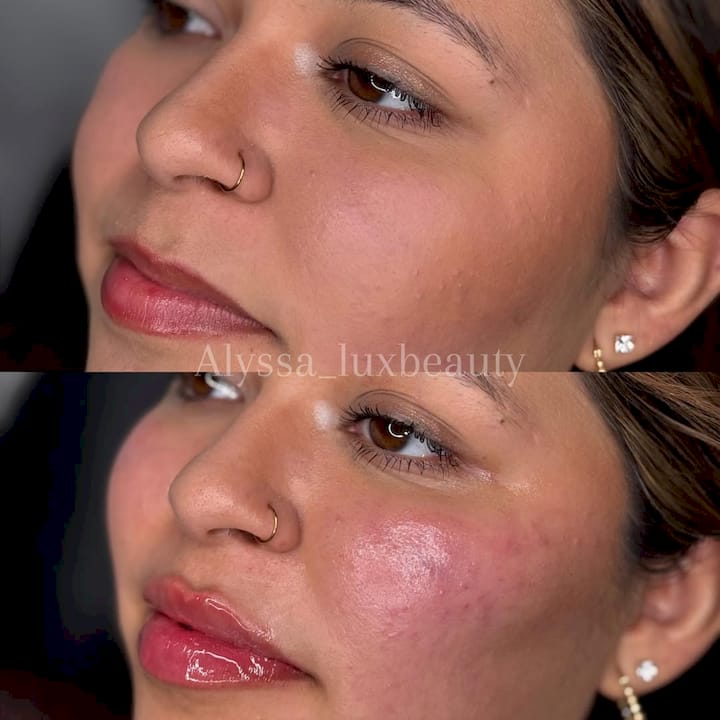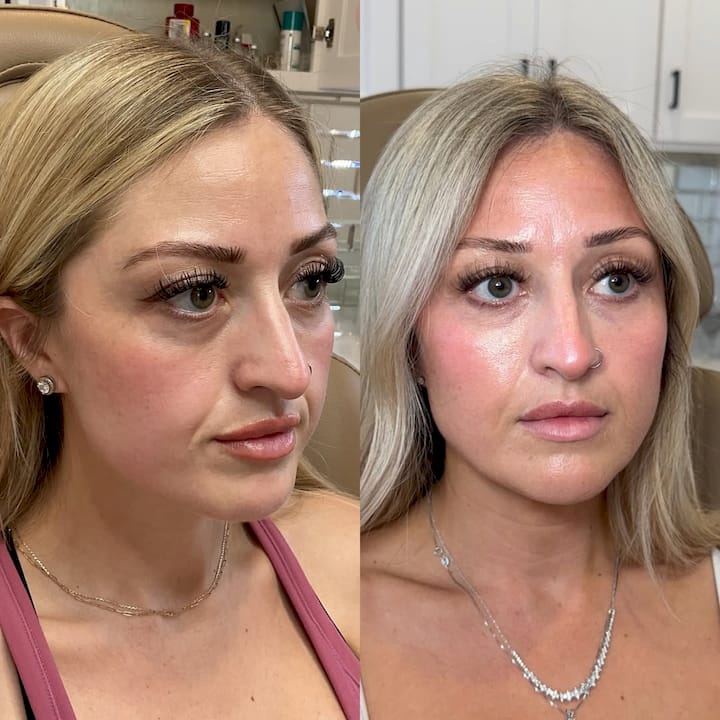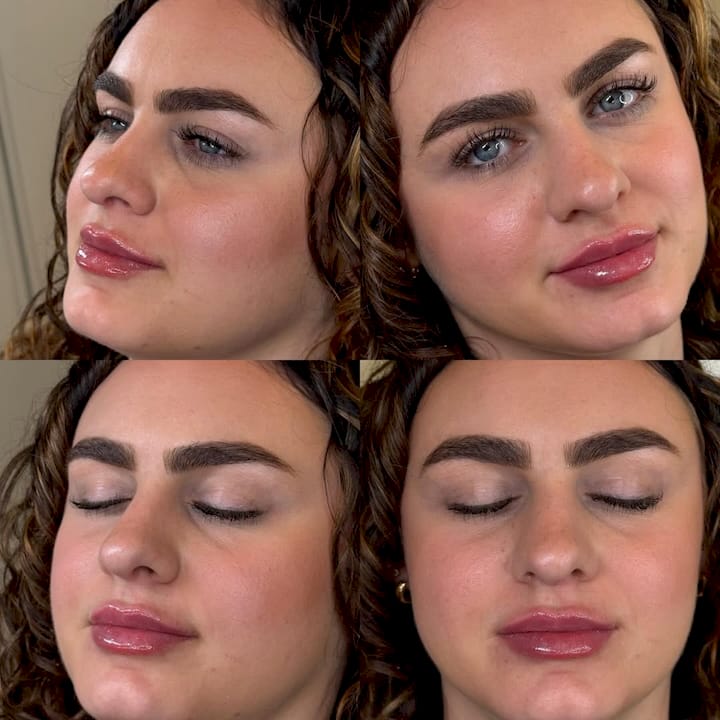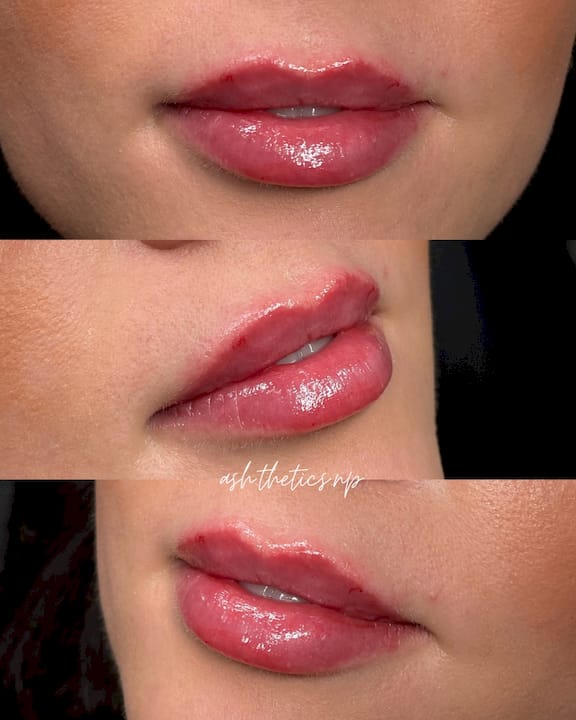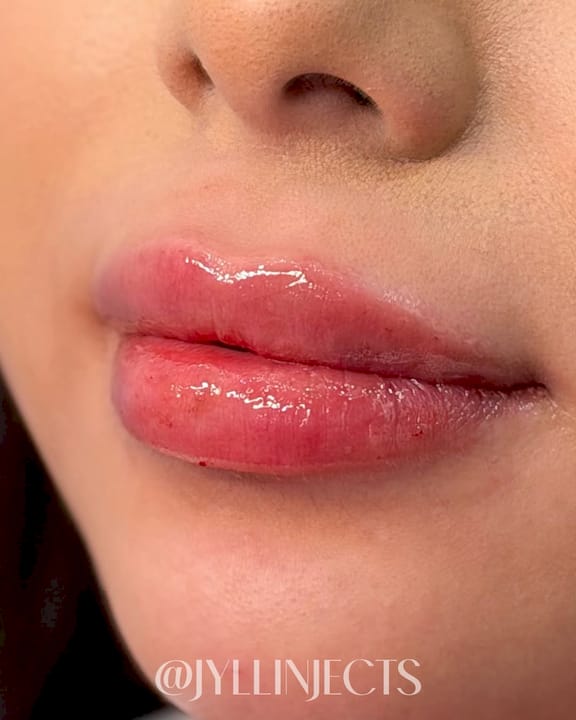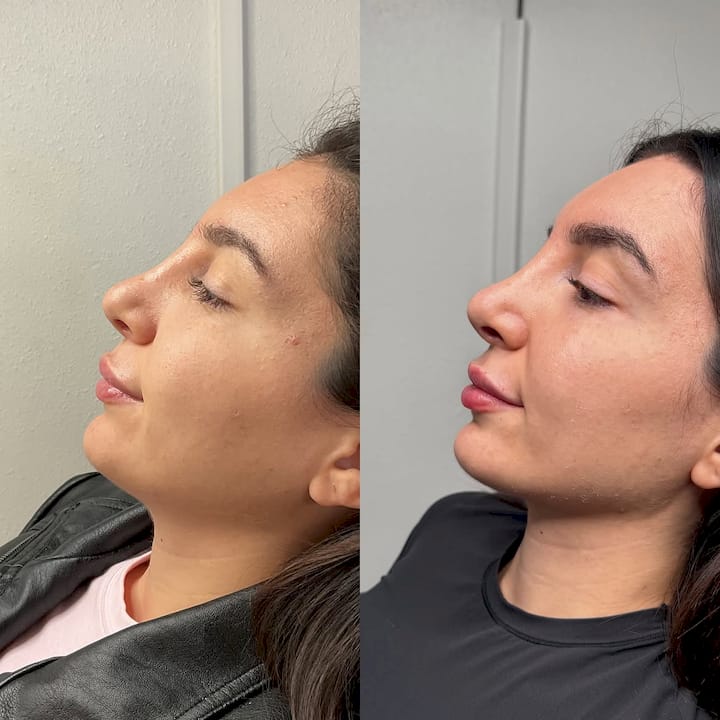
Non surgical rhinoplasty filler is defined as an injectable cosmetic procedure that uses hyaluronic acid dermal fillers to reshape the nose without surgery. The industry standard term is “liquid rhinoplasty,” and both names refer to the same treatment. A trained injector places small amounts of filler to smooth bumps, lift the nasal tip, and correct minor asymmetry. The procedure takes 15–30 minutes, requires no downtime, and delivers immediate visible results with over 90% patient satisfaction in recent studies. That satisfaction rate reflects how well the treatment matches what most patients actually want: a subtle, natural improvement without surgery or recovery time.
How does non surgical rhinoplasty filler work?
Hyaluronic acid filler works by adding volume to specific areas of the nose to change its visual shape. The injector places small deposits of gel beneath the skin to fill depressions, smooth uneven contours, and create the illusion of a straighter or more lifted nose. The nasal bridge, tip, and sides are the most common treatment zones.
What the procedure can do is specific. It smooths a dorsal hump by filling the area above and below it, making the bump appear less prominent. It lifts a drooping tip by placing filler at the base of the columella. It corrects mild asymmetry by adding volume to the flatter side.
What it cannot do is equally specific:
-
Reduce the actual size or width of the nose
-
Improve breathing or correct a deviated septum
-
Replace the structural changes that surgical rhinoplasty provides
-
Produce results that last more than 18 months without retreatment
The filler material itself integrates with nasal tissue through water absorption, which is why hyaluronic acid fillers feel soft and natural after placement. Safe injection practice relies on slow, low-volume micro-bolus injections and blunt-tip cannulas to reduce vascular risk. Aspiration alone is not a reliable safety measure. Anatomical knowledge and technique are what protect patients.
Pro Tip: Ask your injector whether they use a blunt cannula or sharp needle for nasal filler. A blunt cannula reduces the risk of piercing a blood vessel and is the preferred tool for most nasal injection zones.
What results can you expect, and how long do they last?
Results from a liquid rhinoplasty filler treatment appear immediately after the appointment. Swelling may slightly alter the look for the first 48–72 hours, but the final shape is visible within one to two weeks.
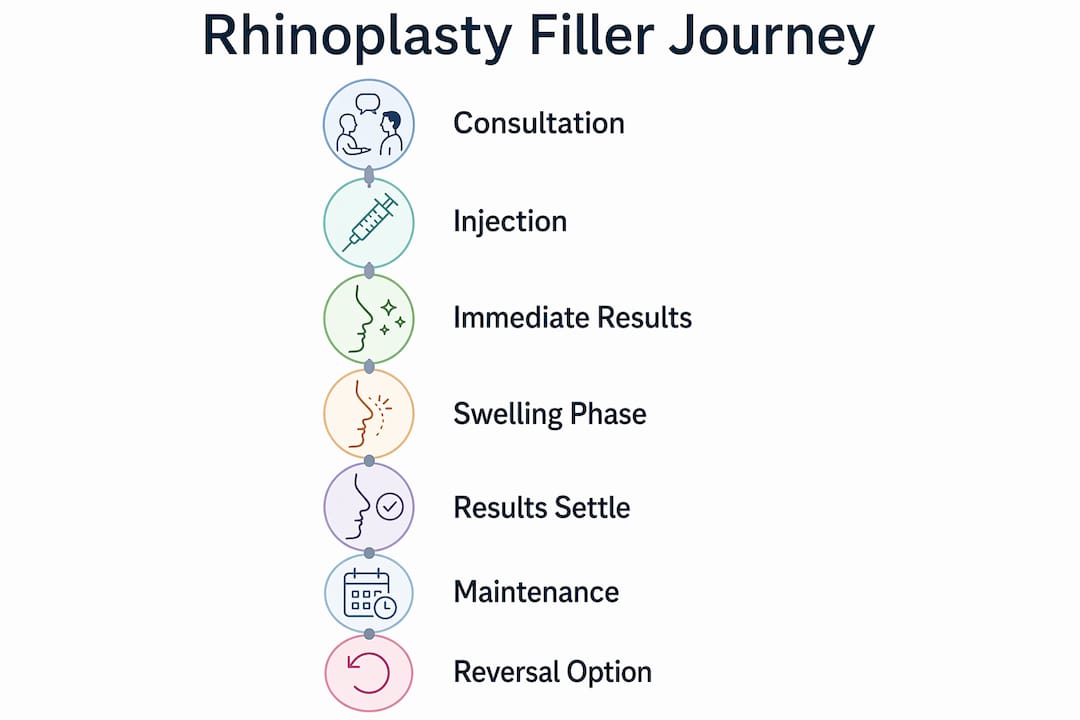
Results typically last 6–18 months, with most patients seeing changes persist for 12 months or longer. The nose has a relatively high blood supply, which means filler metabolizes faster there than in areas like the lips or cheeks. Individual metabolism, filler brand, and injection volume all affect how long results hold.
| Factor | Effect on duration |
|---|---|
| High metabolism | Filler breaks down faster, shorter results |
| Filler type and density | Thicker formulations tend to last longer |
| Nose vascularity | Higher blood flow accelerates biodegradation |
| Repeated treatments | Results may extend with consistent maintenance |
| Injector technique | Precise placement improves longevity |
Patients who return for maintenance treatments often find their results last longer over time. The tissue adapts to the filler’s presence, and smaller touch-up volumes are needed at each visit.
Reversal is straightforward when hyaluronic acid fillers are used. An enzyme called hyaluronidase dissolves the filler within hours. This reversibility is the primary reason hyaluronic acid is the gold standard for nasal filler. Permanent fillers carry risks that are not acceptable in the nasal area, where vascular anatomy is complex and complications require fast intervention.
Pro Tip: Schedule your first treatment at least two weeks before any major event. Swelling is usually mild, but giving yourself buffer time means you will see the final result before the occasion.
What are the risks and safety considerations?
The non invasive nose job is a medical procedure, not a cosmetic shortcut. Its safety profile is strong when performed by a qualified injector, but the risks of poor technique are serious.
The most significant risk is vascular occlusion. This occurs when filler enters or compresses a blood vessel, cutting off circulation to surrounding tissue. In a meta-analysis of 9,657 patients, serious complications including skin necrosis and rare cases of blindness occurred at a rate of 0.27%. That number is low, but the consequences of an unmanaged occlusion are permanent.
The nasal area is particularly vulnerable because several arteries run close to the surface and connect to the ophthalmic circulation. An injector who does not understand this anatomy can inadvertently place filler in a vessel that feeds the eye.
Warning signs of vascular occlusion include:
-
Sudden blanching or white discoloration of the skin
-
Severe pain during or immediately after injection
-
A dusky or bluish color change in the skin
-
Vision changes or loss
Immediate intervention within 12–15 minutes is the therapeutic window for treating vascular occlusion with hyaluronidase. Waiting beyond that window increases the risk of permanent tissue damage. This is why your injector must have hyaluronidase on hand at every appointment, not just available to order.
Early recognition and high-dose hyaluronidase combined with heat application are the first-line emergency measures. Providers who are not trained to recognize and act on these signs within minutes should not be performing nasal filler injections.
Common, minor side effects include bruising, swelling, redness, and tenderness at the injection site. These resolve within a few days and are not a cause for concern. The serious risks are rare but require a provider who is prepared, not just experienced.
Choosing a medically qualified injector trained in nasal vascular anatomy is the single most important safety decision you will make. Price should not be the deciding factor for a procedure with this level of anatomical complexity.
Who is a good candidate for nose filler?
The ideal candidate for a non surgical nose job is someone with realistic goals and minor cosmetic concerns. This procedure works best for specific situations.
-
Dorsal hump correction. You have a visible bump on the nasal bridge that you want to appear smoother without surgery.
-
Tip refinement. Your nasal tip droops slightly or lacks definition, and you want a subtle lift.
-
Mild asymmetry. One side of your nose appears slightly flatter or lower than the other.
-
Post-surgical touch-ups. You have had surgical rhinoplasty and want to refine a small residual irregularity.
-
Surgical hesitation. You want to preview a change before committing to a permanent surgical result.
The procedure is not appropriate for everyone. Fillers only add volume to shape the nose. They cannot make a wide nose narrower or a large nose smaller. Patients who need functional improvements, such as correcting a deviated septum or reducing airway obstruction, require surgical intervention.
Medical contraindications include active skin infections near the nose, autoimmune conditions affecting wound healing, and a history of severe allergic reactions to filler components. Prior nasal surgeries change the vascular anatomy and require extra caution. Always disclose your full medical history during your consultation.
The consultation itself is where realistic expectations are set. A qualified injector will tell you honestly whether your goals are achievable with filler or whether surgery is the better path. That honesty is a sign of a trustworthy provider, not a limitation of the treatment.
Key Takeaways
Non surgical rhinoplasty filler reshapes the nose through strategic hyaluronic acid placement, with results lasting 6–18 months and full reversibility as its defining safety advantage.
| Point | Details |
|---|---|
| Immediate results | Visible changes appear the same day, with final shape settling within two weeks. |
| Results last 6–18 months | Longevity depends on metabolism, filler type, and nose vascularity. |
| Reversibility is the key advantage | Hyaluronidase dissolves hyaluronic acid filler quickly when needed. |
| Vascular occlusion is the top risk | A 12–15 minute treatment window makes injector preparedness non-negotiable. |
| Fillers add volume, not subtract | Nose size reduction requires surgery; filler only refines contour and shape. |
The uncomfortable truth about choosing a nose filler injector
Most people researching a non surgical nose job focus on before-and-after photos and price. Those are the wrong starting points. The photo shows a result. It does not show whether the injector had hyaluronidase ready, whether they understood the angular artery’s path, or whether they would have recognized a vascular occlusion in time.
I have seen patients come in after treatments performed at discounted rates by providers who lacked emergency protocols. The results ranged from uneven filler placement to, in more serious cases, skin changes that required urgent reversal. The 0.27% serious complication rate sounds small until it is your face.
What I tell every patient at Theinjectionroom is this: the reversibility of hyaluronic acid filler is a genuine safety net, but it only works if the injector acts within the 12–15 minute window. A provider who does not stock hyaluronidase on-site cannot meet that standard. Full stop.
The other misconception I encounter regularly is that nose filler is a stepping stone to avoiding surgery forever. For some patients, it is. For others, it is a preview that confirms they want a permanent structural change. Both outcomes are valid. What matters is that you go in with clear eyes about what filler can and cannot do, and that you choose a provider who will tell you the truth rather than take your money.
Preparation also matters more than most patients realize. Reading up on how to prepare for filler before your appointment reduces bruising risk and helps you get the most from your treatment.
— Marina
Nose filler treatments at Theinjectionroom in Austin and San Antonio
Theinjectionroom offers non surgical nose job filler treatments at its Austin and San Antonio locations, administered by medically trained injectors with deep knowledge of nasal anatomy and emergency protocols. Every appointment includes a thorough consultation to assess your goals, review your medical history, and confirm that filler is the right approach for your specific concerns. Hyaluronidase is stocked on-site at every session. Treatment plans are built around your anatomy, not a one-size approach. If you are ready to explore what liquid rhinoplasty can do for your profile, Theinjectionroom provides the clinical environment and expertise to do it safely.
FAQ
What is non surgical rhinoplasty?
Non surgical rhinoplasty is a cosmetic procedure that uses injectable hyaluronic acid filler to reshape the nose without surgery. It corrects bumps, asymmetry, and tip drooping in a 15–30 minute appointment with no downtime.
How long do nose fillers last?
Nose fillers typically last 6–18 months, depending on filler type, individual metabolism, and the vascularity of the nasal tissue. Maintenance treatments can extend results over time.
Can nose filler make my nose smaller?
No. Filler adds volume rather than removing it, so it cannot reduce nose size or width. Patients seeking a smaller nose require surgical rhinoplasty.
What are the risks of nose filler?
The most serious risk is vascular occlusion, which can cause skin necrosis or, rarely, vision loss. Serious complications occur at a rate of 0.27% in large studies. Choosing an injector trained in nasal anatomy and emergency reversal protocols is the primary way to reduce this risk.
Can nose filler be reversed?
Yes. Hyaluronic acid filler dissolves with an enzyme called hyaluronidase. Reversal works best when administered within 12–15 minutes of a vascular complication, which is why on-site availability of hyaluronidase is a non-negotiable standard for any provider performing nasal filler.


%20Pictures%20are%204%20weeks%20apart..jpg)