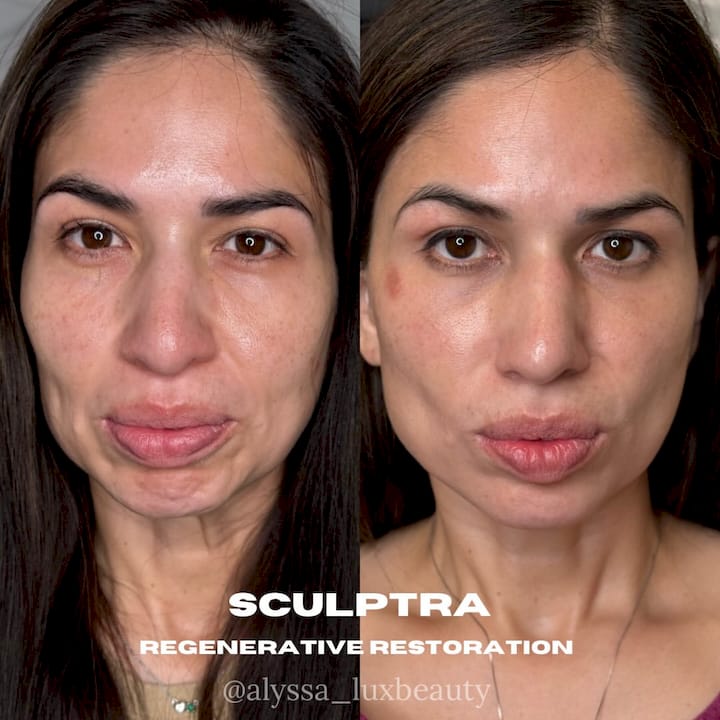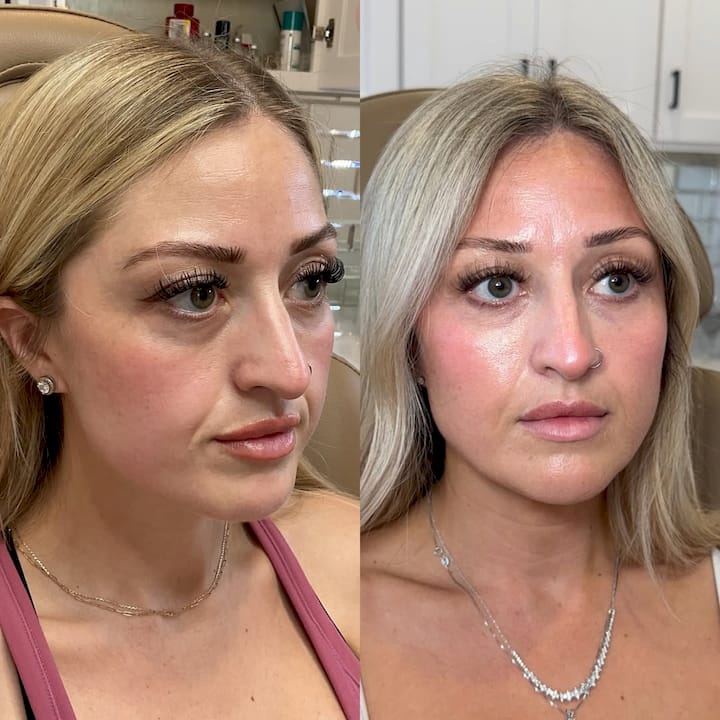
For a full forehead (frontalis) treatment, most adults receive somewhere between 30 and 60 Dysport units, with 40–50 units being a common clinical starting point. That said, your exact dose must be determined by a licensed injector based on your individual anatomy, muscle strength, and treatment goals. Dysport (abobotulinumtoxinA) units are not interchangeable with Botox (onabotulinumtoxinA) units or any other neurotoxin, so a number you see quoted for one product does not translate directly to another.
Key Takeaways
For most adults, 30–60 Dysport units is the typical forehead treatment range, with the final dose always determined by a licensed injector based on your individual anatomy and goals.
| Point | Details |
|---|---|
| Typical unit range | Most adults receive 30–60 Dysport units for a full forehead treatment, with 40–50 units as a common starting point. |
| Units are not interchangeable | Dysport units differ from Botox units; the clinical conversion ratio is approximately 2.5–3 Dysport units per 1 Botox unit. |
| Key dosing factors | Muscle mass, sex, forehead height, line depth, and prior neurotoxin history all change how many units you need. |
| Follow-up is standard | A 2–3 week check is normal practice for assessing results and making minor unit adjustments before the next cycle. |
| The Injection Room | Offers personalized forehead Dysport and Botox treatments in Austin and San Antonio, TX, with a conservative-start protocol and built-in follow-up. |
Table of Contents
How injectors decide how many Dysport units your forehead needs
No two foreheads are the same, and experienced clinicians know that a fixed unit count is a shortcut that leads to inconsistent results. The dosing decision starts with a hands-on clinical assessment, not a price list.
Primary factors that shape the dose:
-
Frontalis muscle mass and strength. A thicker, more powerful frontalis requires more units to achieve the same degree of relaxation. Research on facial anatomy and sex-based dosing confirms that men often need higher doses than women because of their greater muscle mass and baseline contraction strength.
-
Sex. Men typically land at the higher end of the dosing range, sometimes above 50 units for the forehead alone, while women with lighter muscle activity may respond well to 30–40 units.
-
Forehead height and skin elasticity. A taller forehead with more surface area generally calls for more injection points and a higher total unit count to cover the full frontalis.
-
Pattern of dynamic lines. Horizontal lines that appear only on strong expression differ from deep, etched static lines that are visible at rest. Static lines may need a higher dose or a combination approach.
-
Prior neurotoxin history. Patients who have been treated regularly for years often have some degree of muscle atrophy, which can mean a lower effective dose is needed. First-time patients, by contrast, may need a slightly higher starting dose to see full effect.
Secondary factors that also matter:
-
Patient goals: natural, expressive movement versus maximal smoothing
-
Concurrent treatments, such as brow-lift fillers or forehead filler, which can change how much neurotoxin is needed
-
Medical history, including any neuromuscular conditions that are contraindications or require dose modification
Expert injector guidance consistently emphasizes that dosing is individualized based on muscle mass, movement patterns, and patient goals, and that a 2–3 week follow-up for minor unit adjustments is standard practice.
Pro Tip: Ask your injector to perform a dynamic assessment before placing a single unit. A good clinician will ask you to raise your eyebrows fully, then partially, to map where the frontalis is most active and mark injection points accordingly. This takes two minutes and meaningfully improves placement accuracy.
Common dosing protocols: from conservative to stronger
Three broad protocol tiers cover the majority of forehead Dysport treatments in clinical practice. These are reference ranges, not prescriptions, and your injector’s plan may fall anywhere within or between them.
| Protocol | Dysport units (typical range) | Injection points on frontalis | Clinical goal |
|---|---|---|---|
| Conservative | 30–40 units | 4–5 points | Soften lines, preserve full movement |
| Standard | 40–50 units | 6–7 points | Reduce lines noticeably, allow moderate movement |
| Stronger | 50–60+ units | 8–10 points | Maximal smoothing, minimal frontalis movement |
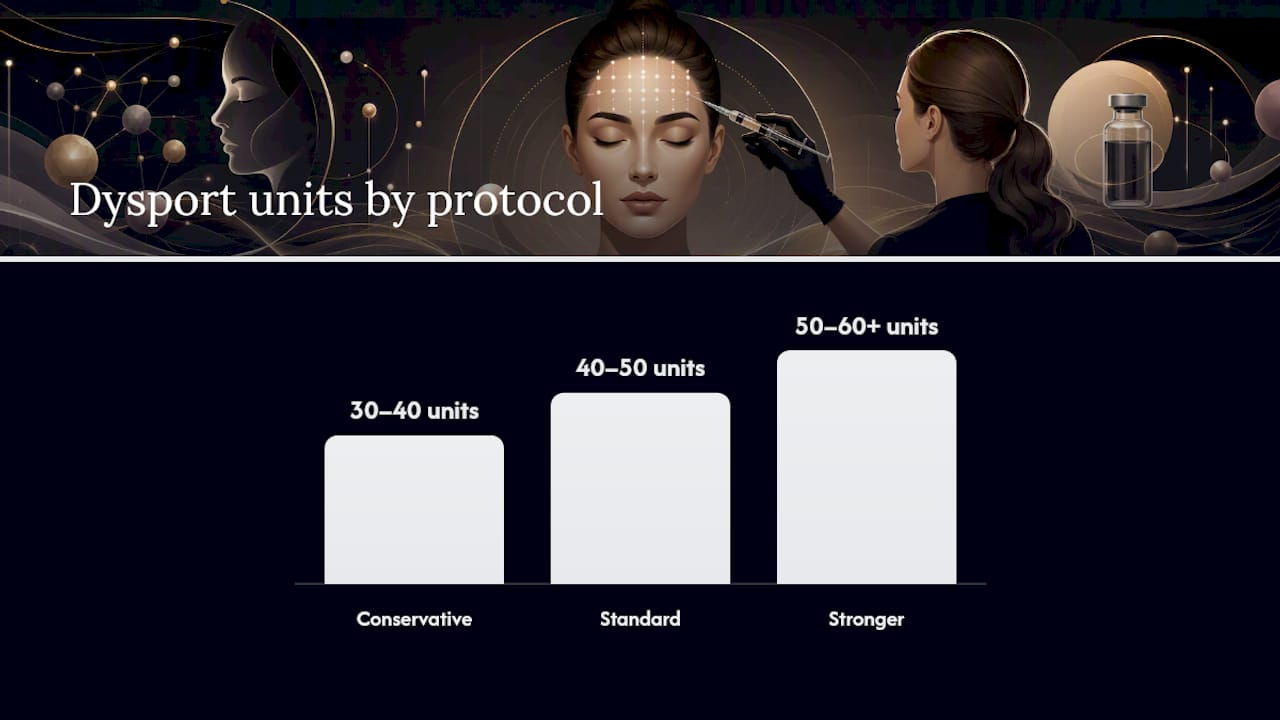
Conservative protocol (30–40 units): This is often the right starting point for first-time patients, those with lighter muscle activity, or anyone who wants to maintain natural expression. Results are visible but subtle, and the follow-up appointment is used to add units if needed.
Standard protocol (40–50 units): The most common range for adult women with moderate frontalis activity. Lines soften significantly while the brow retains some lift and movement. Most patients at this level are happy with the outcome at their two-week check.
Stronger protocol (50–60+ units): Reserved for patients with heavy frontalis action, taller foreheads, or a clear preference for maximal smoothing. Men frequently fall into this tier. When the forehead is treated alongside the glabella (frown lines) in the same session, combined totals can reach a higher unit count across both areas, which is within normal clinical practice for a full upper-face treatment.
A note on Dysport-to-Botox conversion: Clinical literature supports an approximate conversion ratio of 2.5–3 Dysport units per 1 Botox unit. That means a 40-unit Botox forehead treatment might correspond to roughly 100–120 Dysport units when treating the same area, though this math is imprecise and should never be applied mechanically. Rely on your injector’s clinical judgment, not a calculator.
What you need to know about safety and FDA context
Dysport carries FDA approval for the treatment of glabellar lines (frown lines between the brows). The Dysport prescribing information lists the recommended glabellar dose as 50 units, administered as five equal aliquots of 10 units each at five injection sites. Forehead (frontalis) treatment is an aesthetic, clinician-determined application, meaning the injector determines the appropriate dose based on your anatomy and goals rather than a labeled indication.
Common side effects to expect:
-
Injection-site redness, swelling, or bruising (usually resolves within a few days)
-
Mild headache in the first 24–48 hours
-
Temporary heaviness or a feeling of tightness in the forehead
Less common but possible:
-
Brow ptosis (drooping of one or both brows) if units migrate or placement is off
-
Asymmetry, which is typically correctable at the follow-up visit
Seek prompt medical attention if you experience:
-
Difficulty swallowing, speaking, or breathing
-
Generalized muscle weakness
-
Vision changes or drooping of the eyelid (ptosis)
These serious signs, while rare in cosmetic doses, are listed in the Ipsen prescribing information as requiring immediate medical evaluation.
Retreatment should not occur more frequently than approximately every 12 weeks (about every 3 months), per DailyMed guidance. A 2–3 week follow-up check is standard practice for assessing results and making minor unit adjustments before the next full treatment cycle.
Pro Tip: Starting conservatively is not a compromise. It is the safest way to find your personal effective dose without overshooting. A small touch-up at two weeks costs far less than managing a brow droop from too many units placed too aggressively on the first visit.
Questions to ask at your forehead Dysport appointment
Walking in prepared makes a real difference. Here is what to ask and what to watch for:
Questions about the treatment plan:
-
How many total Dysport units do you recommend for my forehead, and why?
-
How many injection points will you use, and where will they be placed?
-
Are you treating my forehead only, or combining it with the glabella or other areas in this session?
-
What is your follow-up policy, and is a 2–3 week check included?
Questions about your provider:
-
What is your training and experience with Dysport specifically?
-
Can you show me examples of forehead results on patients with similar anatomy to mine?
-
Are you a licensed medical professional (nurse practitioner, PA, physician)?
Red flags to watch for:
-
A provider who quotes a unit count without examining your face or watching you move your brows
-
Promises of “zero movement” or “completely frozen” results without discussing whether that is your goal
-
Reluctance to schedule a follow-up or unwillingness to explain the unit plan
-
Pricing quoted only as a flat fee with no transparency about how many units are included
Real-world pricing varies widely depending on whether a clinic charges per unit or per area, and community reports show that combined forehead and other area totals can look very different from a single-area quote. Always ask what the quoted price covers.
How Dysport compares to Botox for forehead treatment
Dysport (abobotulinumtoxinA) and Botox (onabotulinumtoxinA) are both botulinum toxin type A products, but their units are measured on different biological assays and are not interchangeable. Seeing “40 units of Botox” and assuming that equals “40 units of Dysport” is a common and potentially costly mistake.
Conversion range from clinical literature: A systematic review found that a conversion of approximately 2.5–3 Dysport units per 1 Botox unit is reasonable in many clinical settings, though study heterogeneity limits the precision of any single ratio.
Why the conversion is imprecise:
-
The two products use different potency assays, so a “unit” means something biologically different for each
-
Dysport tends to diffuse differently from Botox, which affects how injectors space injection points and choose volumes
-
Conversion ratios reported in the literature range from roughly 2:1 to 4:1, depending on the study design and indication, per a clinical review of conversion ratios
-
Individual patient response adds another layer of variability that no ratio can account for
Clinical implications for you:
-
Expect higher raw unit numbers with Dysport than with Botox for the same area
-
Do not use a Botox unit count from a previous provider to calculate your Dysport dose at a new clinic
-
Ask your injector to explain their Dysport-specific dosing rationale rather than accepting a conversion calculation as the plan
Many clinicians treat the 2.5–3:1 ratio as a starting reference, then refine the dose by watching clinical response at the two-week follow-up. That iterative approach is more reliable than strict unit math. For a deeper look at how Dysport compares to other neurotoxins, this overview of Dysport uses and comparisons covers the key differences in plain language.
How The Injection Room approaches forehead Dysport dosing
At The Injection Room, we treat forehead Dysport dosing as a clinical conversation, not a formula. Here is how a typical patient experience flows from first visit to follow-up.
Our protocol, step by step:
-
Initial consultation: We review your medical history, prior neurotoxin experience, and goals. We ask specifically whether you want to preserve natural movement or achieve maximal smoothing, because that answer shapes the entire plan.
-
Dynamic assessment: We ask you to raise your brows, furrow, and relax repeatedly. We observe where the frontalis is most active, palpate muscle mass, and mark injection points before picking up a syringe.
-
Conservative starting plan: For most new patients, we begin at the lower end of the appropriate range for their anatomy, typically 30–50 units for the forehead, with a clear injection map.
-
Safety checks: We confirm no contraindications, review medications that affect bruising risk, and discuss aftercare before treatment begins.
-
2-week follow-up: We schedule a check at two weeks to assess results. If additional units are needed for symmetry or coverage, we address them at that visit. This is a normal part of the process, not a sign that something went wrong.
-
Re-treatment planning: Most patients return every 3–4 months. We document your unit history so each visit builds on the last.
What to expect during your visit: Treatment takes about 15–20 minutes once the assessment is complete. There is no numbing required for most patients, though we can apply a topical if preferred. Aftercare is straightforward: avoid lying flat for four hours, skip intense exercise for 24 hours, and do not rub the treated area.
Pro Tip: Our philosophy is “as much as necessary, as little as possible.” We would rather start at 35 units and add 10 at your follow-up than start at 60 and leave you with a heavy brow for three months. The follow-up is built into the plan from day one.
For more on what the treatment process looks like from start to finish, our complete Dysport treatment guide walks through each step in detail.
Why preserving some forehead movement is worth protecting
There is a version of forehead Dysport treatment that leaves patients looking smooth but expressionless, and most people do not want that once they see it. The goal of a well-dosed forehead treatment is not to eliminate the frontalis entirely. It is to soften the lines that bother you while keeping enough movement that your face still communicates naturally.
The two-week follow-up is not just a safety net. It is the moment where you and your injector can honestly evaluate whether the dose hit the right balance. Some patients come back wanting a little more smoothing; others are relieved that they kept their natural lift. Either answer is useful information that makes the next treatment better.
Staged dosing, starting conservatively and adjusting, is not a sign of uncertainty. It is the most patient-centered approach available, and it is the one we stand behind at The Injection Room.
Ready to get your forehead Dysport dose dialed in?
At The Injection Room in Austin and San Antonio, TX, our injectors customize every forehead Dysport treatment to your anatomy, goals, and neurotoxin history. We offer both Dysport and Botox, and we will walk you through the unit plan, placement map, and follow-up schedule before we begin. No guessing, no flat-fee mystery pricing.
To book your consultation or schedule a forehead neurotoxin treatment, visit our neurotoxin services page or go directly to our San Antonio neurotoxin booking page. Bring any records of prior neurotoxin treatments (product name, units, and date if you have them), a list of current medications, and any photos of results you liked or did not like. We use that information to build a starting plan that fits you specifically.
This article is for general informational purposes only and is not a substitute for professional medical advice. Consult a licensed medical provider to determine the appropriate Dysport dosage for your individual situation.
Sources
-
DailyMed - DYSPORT- botulinum toxin type a injection, powder, lyophilized, for solution
-
Practical Dermatology — expert injector dosing and tailoring guidance
-
OnabotulinumtoxinA and AbobotulinumtoxinA Dose Conversion: A Systematic Literature Review
-
Conversion Ratio between Botox®, Dysport®, and Xeomin® in Clinical Practice
FAQ
Is 30 units of Dysport a lot for the forehead?
No, 30 Dysport units is on the conservative end of the typical forehead range (30–60 units) and is often an appropriate starting dose for patients with lighter muscle activity or those new to neurotoxin treatment.
How much should 60 units of Dysport cost?
Pricing varies by clinic, location, and whether the charge is per unit or per area. Always ask your provider to confirm the total unit count included in any quoted price so you can compare accurately.
How much Dysport is equal to 40 units of Botox?
Based on the clinical conversion range of approximately 2.5–3 Dysport units per 1 Botox unit, 40 units of Botox corresponds roughly to 100–120 units of Dysport, though this ratio is an estimate and your injector should determine the actual dose based on your response.
Is 50 units of Dysport the same as 50 units of Botox?
No. Dysport and Botox units are measured on different biological assays and are not equivalent. Fifty units of Dysport is a much smaller clinical effect than 50 units of Botox, which is why Dysport is always dosed in higher raw numbers for the same treatment area.
How often can you retreat the forehead with Dysport?
Retreatment should not occur more frequently than approximately every 12 weeks (about every 3 months), per Dysport prescribing guidance. Most patients schedule a 2–3 week follow-up check after their initial treatment and then return for a full retreatment session at the 3–4 month mark.

%20Pictures%20are%204%20weeks%20apart..jpg)