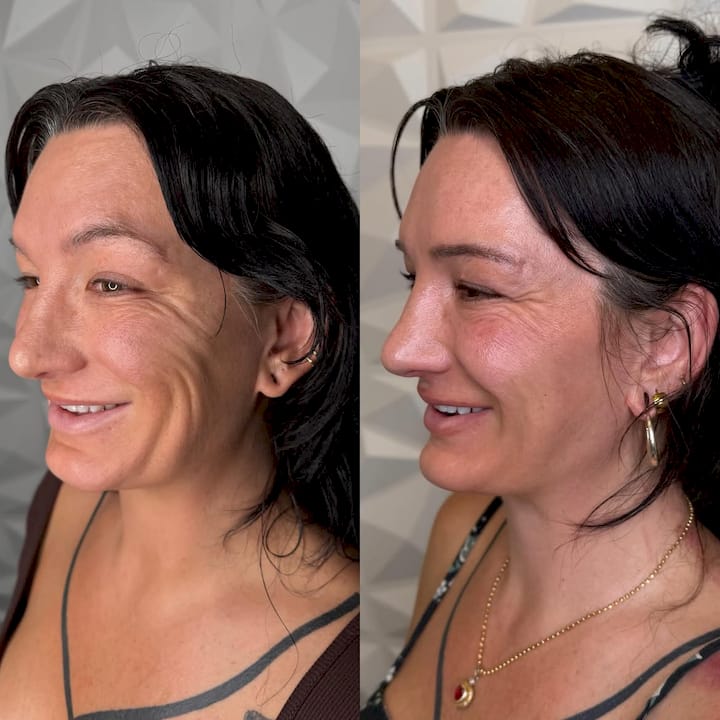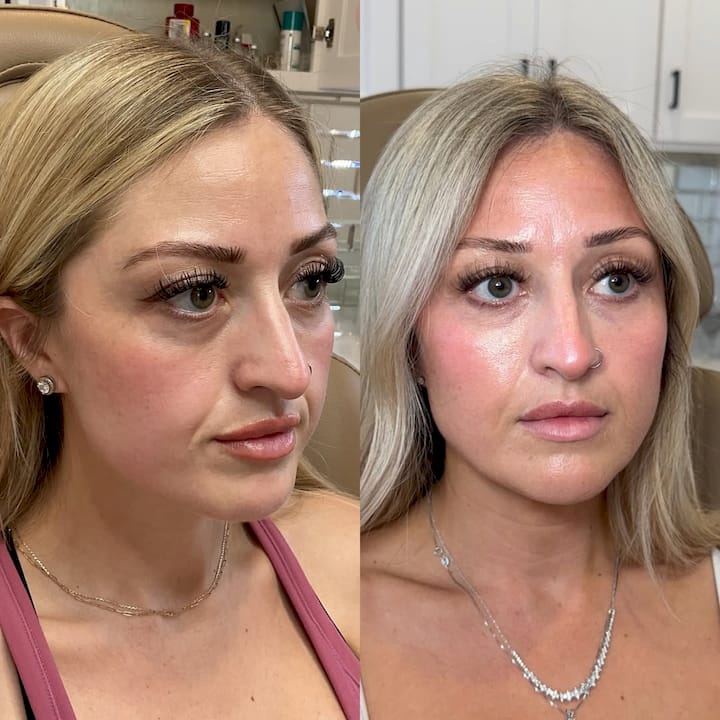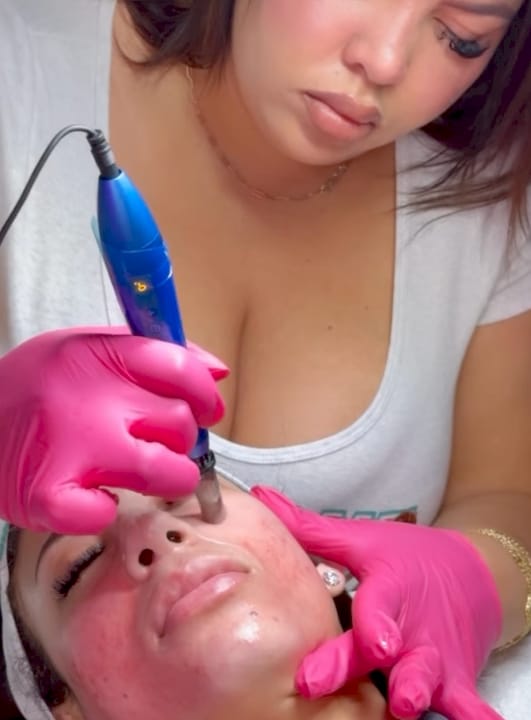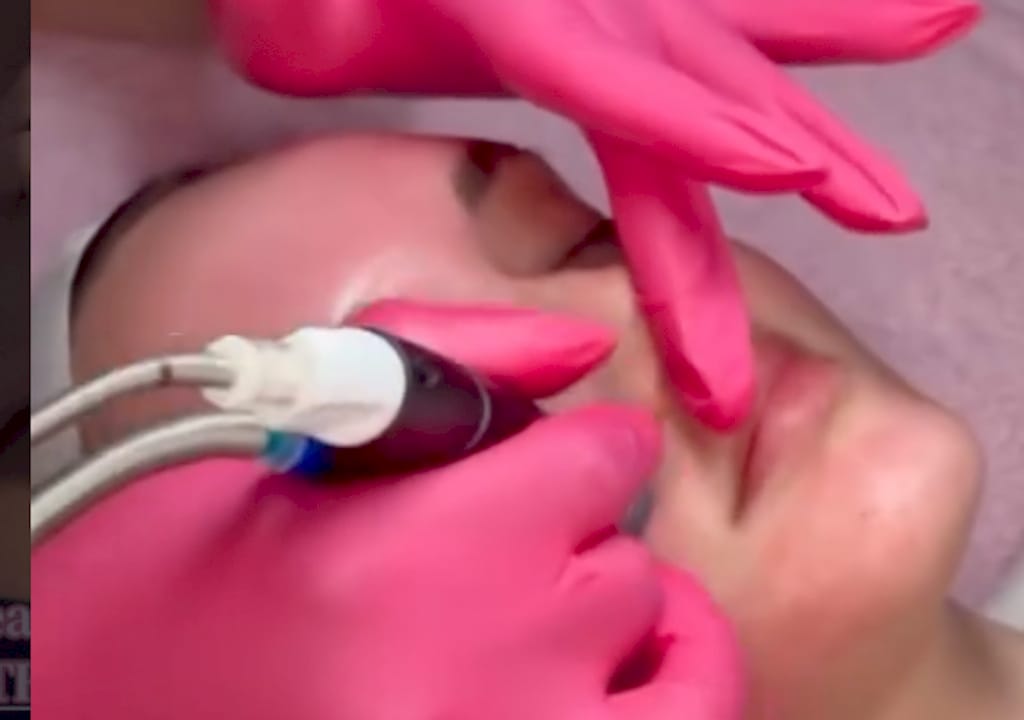
Microneedling under the eyes works, and it works well, for a specific set of problems: fine lines, crepey texture, and superficial pigment. It does not work for deep tear-trough hollows or the bluish, vascular kind of dark circle that comes from thin skin over blood vessels, no matter how many sessions you book. In a nonrandomized clinical trial, patients treated with RF-assisted microneedling saw an average 49% decrease in periorbital wrinkle severity after a series of treatments, and a separate trial using nano-microneedle-assisted phenylethyl resorcinol produced significant melanin index reductions for pigment-related dark circles at eight weeks. Those are real numbers from real trials, and they tell you something important: the technique is genuinely effective when it’s matched to the right cause.
Here’s what the evidence shows at a glance:
-
RF microneedling (RFMN) trials report periorbital wrinkle reductions ranging from roughly 8.5% to nearly 49%, depending on the device and protocol.
-
Microneedle patches (MNP) improved under-eye wrinkle grades over 12 weeks in a split-face trial, with minimal pain and no major side effects.
-
PRP combined with microneedling produced subjective improvement in texture, but a randomized cohort study found no statistically significant objective change after a single session, suggesting the combo needs more than one visit to pay off.
Pro Tip: Before you book anything, get your under-eye concern properly classified. A licensed clinician can tell you in minutes whether your dark circles are pigment, vascular, structural, or some mix of the three, and that single conversation will save you from spending money on a treatment that was never going to touch your actual problem.
Key Takeaways
Microneedling under the eyes works reliably for fine lines, crepiness, and superficial pigment when performed with conservative, periorbital-specific technique across a full series of sessions.
| Point | Details |
|---|---|
| Match treatment to cause | Microneedling helps texture and pigment but not structural hollows or vascular dark circles. |
| Expect a series, not one visit | Most protocols use about 3 sessions, with full results visible around 3 months. |
| Needle depth is conservative | Providers use shallow settings, often near 0.25 mm, to protect delicate periorbital tissue. |
| Screen for risk factors first | Disclose HSV history, skin tone, and medications before booking any session. |
| The Injection Room offers assessed care | Its periorbital microneedling protocols in San Antonio and Austin start with a cause-specific consultation. |
Table of Contents
How Microneedling Under Eyes Rejuvenates Thin Skin
Microneedling under the eyes works by triggering a controlled injury that your skin interprets as damage worth repairing. Tiny needles puncture the epidermis and upper dermis in a grid pattern, and your body responds with a wound-healing cascade: platelets aggregate, growth factors flood the area, fibroblasts activate, and new collagen and elastin start forming over the following weeks. This is neocollagenesis, and it’s the same mechanism behind microneedling anywhere on the face, just applied to skin that’s thinner, more delicate, and closer to bone and orbital structures than skin on the cheeks or forehead.
Radiofrequency-assisted microneedling (RFMN) adds a second layer to that mechanism, delivering enhanced outcomes through minimum invasive treatment to rejuvenate the skin. Instead of relying purely on mechanical injury, RFMN delivers thermal energy through the needle tips directly into the dermis, which intensifies collagen remodeling without necessarily requiring deeper needle penetration. That thermal component is why RFMN devices have produced some of the more dramatic periorbital results in published trials, including that 49% reduction in wrinkle severity using the Voluderm system. The heat encourages more aggressive tissue tightening than needling alone, which matters in an area where skin laxity and crepiness are often the primary complaint.
The microchannels created during treatment also serve as temporary delivery routes for topical ingredients. A randomized split-face trial found that pairing nano-microneedling with phenylethyl resorcinol, a tyrosinase-inhibiting brightening agent, produced significant melanin index reductions compared to topical application alone. The needling doesn’t just wound the skin to prompt repair. It opens a short window where actives penetrate deeper than they would through intact stratum corneum, which is part of why so many protocols now pair microneedling with a topical serum immediately after treatment.
What Under Eye Microneedling Can and Cannot Fix
Microneedling under the eyes is genuinely effective for fine lines, crepey texture, dehydration-related dullness, and mild superficial pigment, but it does not rebuild lost volume or shrink visible blood vessels. That distinction is the single most common source of disappointment among first-time patients, and it comes down to what the tissue underneath your under-eye skin actually looks like.
Conditions that typically respond well:
-
Fine lines and crepey texture from collagen loss
-
Superficial pigment and uneven tone
-
Dehydration-related dullness and rough texture
-
Mild skin laxity in the early stages
Conditions that microneedling alone usually cannot fix:
-
Deep tear-trough hollows caused by fat pad descent or bone loss
-
Visible bluish or purple veins showing through very thin skin
-
Significant volume loss that creates a shadow under the eye
If your dark circles are structural, meaning there’s an actual hollow or depression, no amount of collagen stimulation will fill that gap. That’s a volume problem, and it calls for a different approach entirely, like under-eye fillers, which restore lost volume directly rather than trying to remodel the skin sitting on top of it.
Pro Tip: For pigment-driven dark circles specifically, combining microneedling with a topical brightener or PRP tends to outperform either approach alone. The needling creates the delivery channels, and the active ingredient or growth factors do the rest of the work over the following weeks.
Types of Microneedling Treatments for the Eye Area
Several distinct categories of microneedling exist for the periorbital zone, and each one fits a different combination of budget, tolerance for downtime, and severity of concern. Traditional clinic microneedling pens use fine needles to create controlled micro-injuries without any thermal component, making them the most conservative starting point for someone new to the area. RFMN devices add radiofrequency energy at the needle tip, producing stronger collagen remodeling but requiring more careful handling given the proximity to orbital bone and delicate tissue.
Microneedle patches (MNP) represent the at-home or low-downtime end of the spectrum. These are adhesive patches embedded with dissolvable or solid microneedles that you apply directly to the under-eye area, and a split-face clinical trial found that both longer and higher-density needle designs improved under-eye wrinkles over 12 weeks, with longer needles producing slightly faster results at the cost of marginally more discomfort. They won’t match the depth or intensity of an in-clinic RFMN session, but they’re a reasonable maintenance tool between professional treatments.
Then there’s the combination category: microneedling paired with platelet-rich plasma (PRP) or targeted topicals. PRP uses your own blood, spun down to concentrate growth factors, then applied to the skin immediately after needling so it penetrates through the fresh microchannels. A randomized, blinded cohort study on combined PRP and microneedling found patients reported subjective improvement in texture and homogeneity, though dermatologists’ objective assessments showed no significant change after a single session. That gap between how patients feel and what a blinded evaluator sees is worth remembering: one treatment rarely tells the full story, and the researchers themselves called for larger, multi-session studies before drawing firm conclusions.
Nano-microneedle plus phenylethyl resorcinol falls into the same combination bucket but targets pigment specifically rather than texture or laxity, and it’s the protocol behind that melanin index reduction mentioned earlier. If you want a deeper technical breakdown of how RF devices differ from standard needling, our guide on RF microneedling benefits covers device mechanics in more detail.
Safe Needle Depths and Technique Around the Eyes
The infraorbital area requires far shallower needle settings than the cheeks, forehead, or jawline, because the skin there is thinner and sits close to orbital bone and delicate vascular structures. Clinicians typically work at very conservative depths, often around 0.25 millimeters directly under the eye, compared to 0.5 to 2.5 millimeters used elsewhere on the face. That’s not a minor adjustment. It’s a fundamentally different treatment zone that demands its own protocol.
Technique matters as much as depth here. Clinicians often use a crisscross pattern with multiple light passes rather than fewer aggressive ones, and many gently stretch the skin taut before each pass to get more even needle penetration on a surface that’s naturally loose and mobile. Topical numbing cream is standard, applied 20 to 30 minutes before treatment, since the area is more sensitive than most other parts of the face despite the shallow depth.
RFMN introduces an additional variable: thermal spread. The FDA has issued a safety communication warning that heat from RF microneedling devices can extend beyond the needle tip, and aggressive settings or excessive passes near the eye carry a real risk of deeper tissue injury, including subcutaneous fat atrophy. This is why device selection and operator training matter so much in this specific zone.
-
Insulated needles concentrate RF energy in the dermis and tend to spare the epidermis, which lowers the risk of surface burns and post-inflammatory pigment changes.
-
Non-insulated needles distribute heat more broadly and are generally reserved for thicker-skinned areas away from the orbital rim.
Pro Tip: Ask your provider directly whether their RFMN device uses insulated needles for periorbital work. Insulated tips protect the epidermis while still delivering thermal energy to the dermis, and that distinction becomes especially important if you have darker skin, since device configuration measurably affects PIH risk in that population.
Should You Choose a Clinic Treatment or an At-Home Device?
For under-eye concerns, in-clinic treatment is the safer and more effective route in most cases, though microneedle patches can serve as a reasonable maintenance tool for mild surface texture between professional sessions. The gap between the two comes down to needle depth, density, and how much control the device allows over placement.
Clinical devices, especially RFMN systems, penetrate to depths and deliver thermal energy that home rollers and patches simply aren’t built to replicate. A clinician also adjusts pressure, angle, and pass count in real time based on how your skin responds, something no at-home tool can do. Patches, by contrast, use fixed needle lengths and rely entirely on your own hand pressure, which limits both depth and consistency. They’re not without value: the split-face trial on MNP designs showed genuine wrinkle improvement over 12 weeks with good tolerability, but that was measured against baseline, not against what an in-clinic device could achieve in the same timeframe.
Certain situations should push you toward a clinician rather than a drugstore patch or home roller. A history of herpes simplex virus around the mouth or eyes calls for a conversation about antiviral prophylaxis before any needling, since the procedure can trigger reactivation. Darker skin tones carry a higher baseline risk of post-inflammatory hyperpigmentation, which means device settings and technique need to be dialed in by someone experienced with that skin type. Mixed-cause dark circles, meaning some combination of pigment, vascularity, and volume loss, need a trained eye to sort out before any treatment plan makes sense. And if you’ve had previous eyelid surgery, the tissue architecture underneath your skin has changed, which is a conversation you want to have with a provider, not a decision to make alone with a box of patches from the pharmacy.
Side Effects, Risks, and Who Should Avoid Treatment
The most common side effects of under-eye microneedling are short-lived: redness, mild swelling, and pinpoint scabbing that typically resolve within two to seven days. The more serious risks, though less common, include post-inflammatory hyperpigmentation, infection, and in rare cases, persistent scarring or pigment changes that take months to fade.
Certain conditions rule out treatment entirely or call for extra caution. Active infection in the area, including cold sores from HSV, is an absolute reason to postpone. Inflammatory skin disease affecting the eyelids or under-eye area, pregnancy, recent use of isotretinoin, and uncontrolled systemic disease like diabetes all belong on the list of things to disclose before anyone touches a needle to your face.
| Risk Factor | What to Discuss With Your Clinician |
|---|---|
| History of cold sores (HSV) | Ask about antiviral prophylaxis before treatment to prevent reactivation |
| Darker Fitzpatrick skin types | Confirm the device uses insulated needles and conservative RF settings to reduce PIH risk |
| Recent isotretinoin use | Disclose timing; most clinicians require a waiting period before microneedling |
| Pregnancy | Postpone elective microneedling until after pregnancy |
| Uncontrolled systemic disease | Get medical clearance before scheduling any periorbital procedure |
Risk mitigation starts with a patch test for anyone with sensitive skin or a history of reactions, and it continues through the entire aftercare window. Strict sun protection, gentle skincare, and avoiding active ingredients for at least a week after treatment all reduce the odds of pigment complications, which are the risk clinicians worry about most in this particular zone.
How Long Until You See Results, and How Many Sessions Do You Need?
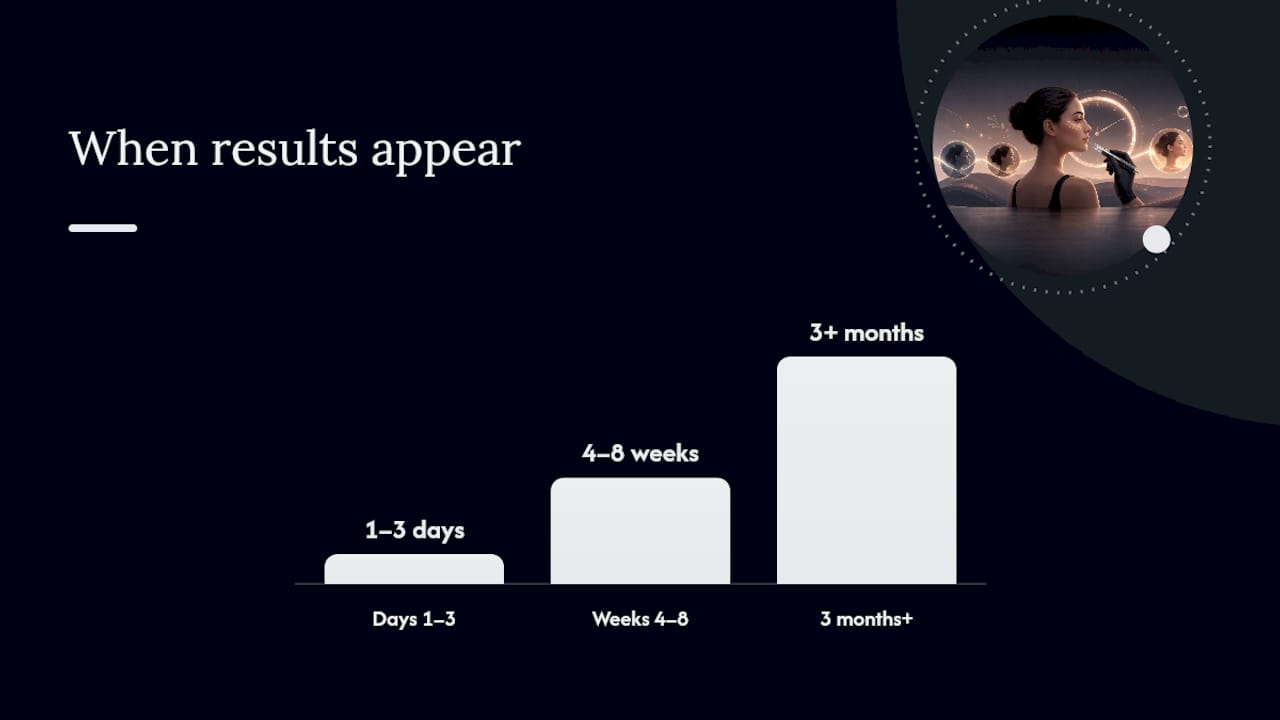
Most published trials and clinical guidance point to a series of three to six sessions, spaced several weeks apart, with visible improvement building gradually over weeks to months rather than appearing after a single visit. Anyone expecting dramatic overnight change from one treatment is going to be disappointed, and that expectation gap is one of the most common reasons patients walk away from microneedling feeling like it “didn’t work” when the protocol simply wasn’t finished.
The timeline generally breaks down like this:
-
Days 1 to 3: The inflammatory phase. Redness, mild swelling, and pinpoint scabbing are normal and expected.
-
Weeks 4 to 8: Early collagen remodeling becomes visible. Texture starts to smooth, and fine lines may look slightly softer.
-
3 months and beyond: More complete improvement, as collagen continues to mature and reorganize. This is the window most clinical trials use for their final photographic assessments.
A prospective study using microneedle fractional radiofrequency measured periorbital wrinkle reduction across multiple sessions and photographic analysis, landing at an 8.55% average improvement on the treated side versus control, a modest but real number that reflects a real multi-session protocol rather than a single dramatic visit. Expert commentary on serial treatment requirements consistently reinforces that single sessions rarely produce durable structural change in this area.
Once you’ve completed an initial series, maintenance sessions every few months, paired with consistent topical care, help sustain results. Skipping maintenance doesn’t undo your progress overnight, but collagen production naturally slows again once stimulation stops, so most providers recommend keeping some kind of periodic touch-up on the calendar. For a fuller picture of what a typical treatment course looks like, see our guide on what to expect from microneedling.
Preparing for Treatment and Aftercare That Actually Works
The single most important prep step is disclosing your full history, including any HSV, recent isotretinoin use, medications, and prior procedures, to your clinician before treatment. The single most important aftercare rule is just as simple: stay out of the sun and off active ingredients until your provider says otherwise.
Before your appointment, come prepared to discuss a few specifics with your clinician:
-
History of cold sores or herpes simplex, so prophylactic antivirals can be considered if needed
-
Current medications and supplements, particularly blood thinners
-
Any prior eyelid surgery or filler in the area
-
Your skin type and history of pigment changes after other procedures
After treatment, your skin will be more vulnerable than usual for several days. Avoid retinoids, exfoliating acids, and any physically abrasive products until the skin has fully closed and settled, which is typically a few days but can vary depending on how aggressive the session was. Sun exposure is the biggest threat to a good outcome in this window, since UV exposure on freshly needled skin significantly raises the odds of post-inflammatory hyperpigmentation. Broad-spectrum sunscreen and a hat aren’t optional extras here.
Watch for warning signs that go beyond normal redness and swelling: spreading warmth, pus, fever, or pain that worsens rather than improves after the first day or two. Any of those warrant a call to your clinic right away rather than waiting it out. Our detailed aftercare guide walks through the full recovery timeline step by step if you want a more granular checklist.
What Under Eye Microneedling Typically Costs
Under-eye microneedling sessions in the United States generally run somewhere between $200 and $600 per session, though the exact price depends heavily on the device used, the provider’s experience level, and your geographic location. RFMN treatments tend to sit at the higher end of that range given the added equipment and technical skill required, while standard microneedling pens without a thermal component are usually more affordable. Package pricing for a full series of three to six sessions often brings a per-session discount compared to booking one at a time.
Before you commit to a provider, a short round of questions can save you from a disappointing or unsafe experience:
-
What device and manufacturer do you use for periorbital treatment, and does it use insulated needles?
-
What needle depth range do you typically use around the eyes?
-
Can you show me before-and-after photos specifically from periorbital cases, not just cheeks or forehead?
-
What’s your protocol if a patient develops post-inflammatory hyperpigmentation after treatment?
-
How many periorbital microneedling treatments have you personally performed?
Red flags to walk away from include a provider who can’t produce periorbital-specific before-and-after photos, one who’s evasive about device settings or needle depth, or anyone promising dramatic, permanent results after a single session. Legitimate clinicians know this area requires a series, and they’ll tell you that upfront rather than overselling a one-visit fix. You can review our clinic’s microneedling service page to see the standard of documentation and transparency worth expecting from any provider you’re considering.
What the Strongest Clinical Trials Actually Show
The clinical evidence for periorbital microneedling supports modest-to-strong wrinkle improvement depending on the device and protocol, along with measurable pigment reduction in topical-adjuvant trials, though results vary enough across studies that no single number tells the whole story. Reading the trials side by side is more useful than picking one headline figure.
| Study Focus | Reported Outcome | Notable Detail |
|---|---|---|
| RF microneedling (Voluderm) | Average 49% decrease in LFW score | Nonrandomized trial; minimal downtime reported |
| Microneedle fractional RF (MRF) | 8.5% wrinkle reduction | Multiple sessions with photographic analysis |
| Nano-microneedle + phenylethyl resorcinol | Significant melanin index reduction at 8 weeks | Randomized split-face design |
| Microneedle patches (MNP) | Statistically significant wrinkle improvement at 8 to 12 weeks | Longer needles slightly faster but more pain |
| PRP + microneedling | Subjective improvement; no significant objective change | Single session only; authors called for larger studies |
The spread between an 8.5% and a 49% wrinkle reduction across two RF-based studies isn’t a contradiction. It reflects differences in device, session count, and how each trial measured its outcome. What ties every one of these studies together is a shared limitation: small sample sizes, split-face or single-center designs, and a consistent finding that multi-session protocols outperform single visits. Objective, dermatologist-assessed outcomes also don’t always match subjective patient-reported improvement, which the PRP combination study made especially clear. None of this undermines the case for microneedling. It just means the honest answer to “does it work” is “yes, with the right protocol and realistic expectations,” not “yes, instantly, for everyone.”
A Clinician’s Note on Setting Realistic Expectations
When a patient comes in asking about under-eye microneedling, the first question isn’t which device to use. It’s what’s actually causing their concern. Fine lines and crepey texture respond well to microneedling alone, often with a topical brightener added for anyone dealing with pigment on top of texture. When someone has more stubborn pigment or wants to accelerate results, adding PRP or a targeted topical to the protocol tends to make sense, though it’s worth being upfront that a single combined session rarely produces a dramatic before-and-after.
Where microneedling isn’t the right recommendation is when someone’s real complaint is volume loss or a visible hollow. In that case, a filler consultation or a different treatment path serves them far better than pushing a needling series that was never going to address a structural issue. Whoever you consult with, whether at our clinic or elsewhere, ask specifically about the device model, needle depth for the periorbital zone, and how many periorbital cases they’ve personally treated. Credentials and device specifics matter more here than almost anywhere else on the face.
How The Injection Room Approaches Under-Eye Microneedling
If you’re weighing whether to book a session, the most useful next step is a consultation where a licensed provider actually examines your under-eye area before recommending anything. The Injection Room offers professional microneedling in San Antonio and Austin, with conservative, periorbital-specific protocols designed around the safety considerations covered throughout this guide, including careful needle depth and device selection for the delicate skin around the eyes.
Our team evaluates whether your concern is texture, pigment, or something structural, and builds a plan around that assessment rather than a one-size-fits-all package. For patients near San Antonio, that means local microneedling appointments with the same attention to protocol detail described here, and Austin-area patients can find the same standard of care through our Austin microneedling services. During your consult, feel free to ask about our device settings, review before-and-after photos specific to the periorbital area, and confirm your provider’s experience with this particular zone before committing to a series. Booking that first consultation is the concrete step that turns everything in this guide into an actual plan for your skin.
Sources
-
Clinical trial comparing microneedle patch designs for under-eye wrinkle rejuvenation
-
FDA safety communication: potential risks of certain uses of radiofrequency (RF) microneedling
Evidence quality varies across these studies by sample size, design, and how outcomes were measured, so results from any single trial shouldn’t be read as a guarantee of what you’ll personally experience.
This article is general information, not a substitute for advice from a qualified doctor. Consult a qualified healthcare professional about your own circumstances before acting on anything here.
FAQ
Is Microneedling Under the Eyes Good for Fine Lines?
Yes, clinical trials show meaningful improvement in periorbital fine lines and wrinkles, with reductions ranging from about 8.5% to nearly 49% depending on the device and number of sessions.
Can Microneedling Help With Under-Eye Circles?
It helps with dark circles caused by pigment or dehydration, and a nano-microneedle plus topical trial showed significant melanin index reduction, but it does not fix circles caused by structural hollows or visible veins.
What’s the Best Treatment for Bags Under Your Eyes?
Under-eye bags caused by fat pad protrusion are a structural issue that microneedling doesn’t address; a consultation can help you determine whether your concern is puffiness, volume loss, or skin laxity, since each calls for a different approach.
Is 40 Too Old for Microneedling?
No, age alone doesn’t disqualify someone from microneedling; candidacy depends more on skin type, medical history, and the specific concern being treated than on a person’s age.
How Many Sessions Does Under-Eye Microneedling Typically Take?
Most protocols involve three to six sessions spaced several weeks apart, with visible improvement building gradually over two to three months rather than after a single visit.

%20Pictures%20are%204%20weeks%20apart..jpg)