Reviewed by Andee Carroll, Registered Nurse (RN), The Injection Room, Austin and San Antonio, TX. Last updated October 2026.
The short version
- Botox in your frown lines should last about three to four months. Dysport, Xeomin and Letybo last about as long, and Daxxify lasts around six months for many people.
- If yours fades at six weeks, the most common reason is the dose. Too few units for the strength of your muscles wears off early, whatever the brand.
- The other usual reasons: a treatment area that only takes a few units, stronger-than-average muscles, a product that was over-diluted or mixed too long before use, judging the result by movement instead of lines, and, very rarely, your body no longer responding.
- Exercise and a "fast metabolism" get blamed a lot. The evidence doesn't back that up.
- The fixes are simple once you know the cause: a full dose, the right toxin for your goals, and visits spaced at least three months apart.
How long is Botox supposed to last?
About three to four months. That's what the FDA label says for Botox in frown lines, and Dysport's label says its effect can last up to four months. Xeomin and Letybo work on a similar timeline. Daxxify, the longest-lasting toxin we stock, lasts around six months for many people.
Two details explain most of the confusion about "wearing off."
First, toxin peaks at around two weeks. If you judge your result on day 14, everything after that will feel like fading, even when it's working exactly as expected.
Second, it fades gradually. You get some movement back first, usually somewhere between eight and twelve weeks, and the lines themselves come back later. A little movement at eight weeks is normal. Full movement at six weeks isn't.
Why does your Botox wear off after six weeks?
These six reasons cover almost every case we see. Some people have two at once.
1. The dose was too small for your muscles
This is the most common reason by a wide margin. The FDA-labelled dose for frown lines is 20 units of Botox, Xeomin or Letybo. Plenty of treatments use less, either to keep more natural movement ("baby Botox") or to keep the price down. A smaller dose works, and it wears off sooner.
If you've been told your treatment is "a few units here and there," or your price was quoted per area without a unit count, the dose is the first thing to check.
2. The area only takes a few units
Some areas wear off faster because they're treated with small doses on purpose. A lip flip uses four to six units and usually lasts six to eight weeks. Forehead lines are often treated lightly so your brows don't drop, and a light forehead dose fades sooner than a full dose between the brows.
That's normal, and it isn't a sign anything went wrong. It's worth knowing so you can judge each area on its own timeline.
3. Your muscles are stronger than average
Strong, expressive muscles need more toxin to stay relaxed. That's why men usually need more units than women for the same area. In one dose-ranging study in men with frown lines, 40, 60 and 80 units of Botox all worked better than 20 units, the standard dose for women.
If you frown hard, squint a lot, or your lines come back first in one spot, you probably need more units there.
4. The product was over-diluted or mixed too long ago
Toxin comes as a powder that your injector mixes with saline. Mixed with extra saline, each injection carries less toxin. Botox Cosmetic's label says it should be used within 24 hours of mixing, and Dysport's label says the same. Product that sits longer, or is stretched with extra saline, may not perform the way you'd expect.
You can't check this yourself, which is why the clinic matters. Ask how many units you're getting and which brand, and make sure your receipt shows both.
5. You're judging movement instead of lines
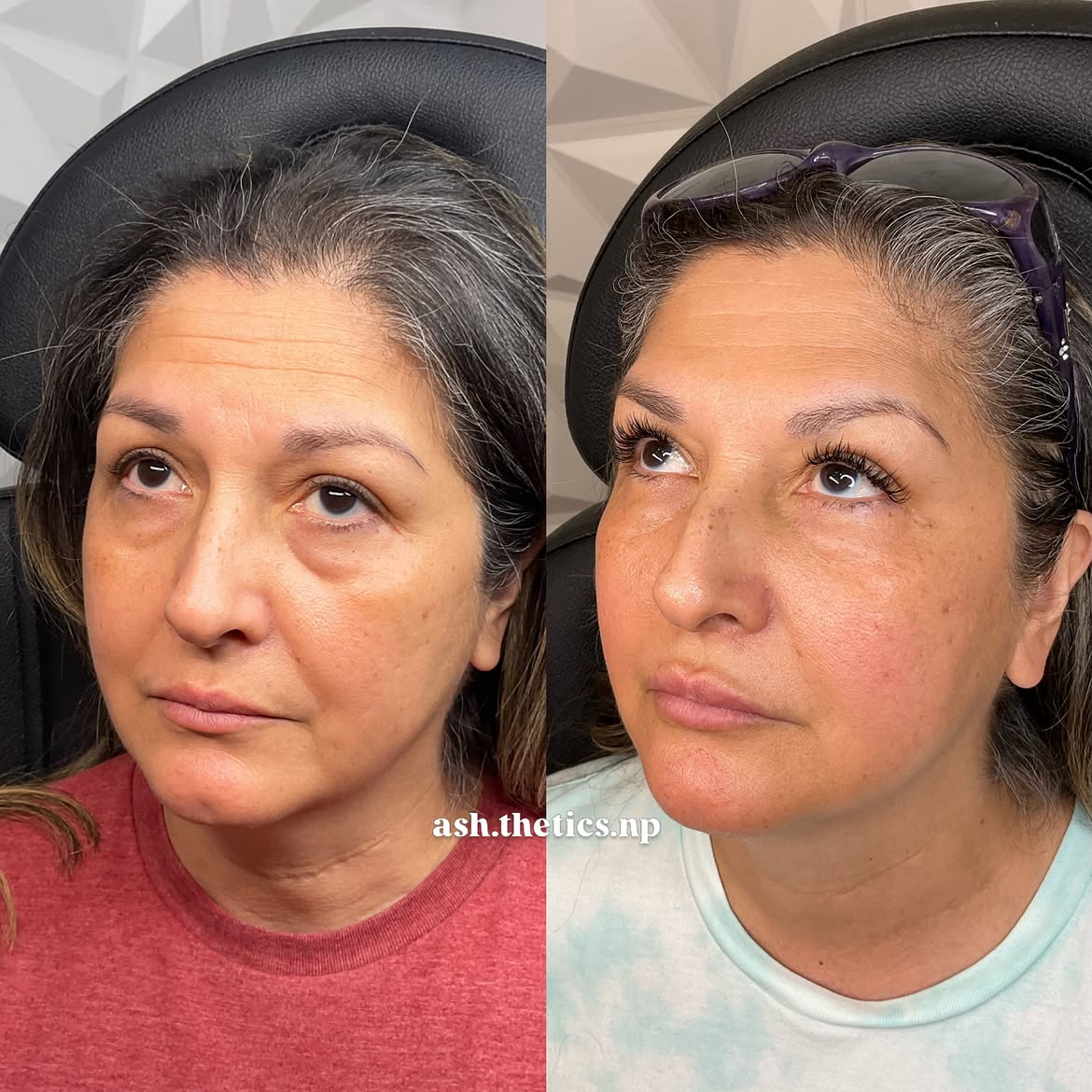
Toxin is meant to soften lines. Many people want a completely frozen forehead, notice the first flicker of movement at six or eight weeks, and decide it has worn off. If your lines are still much softer than before treatment, it's still working.
The simplest check is a photo. Take the same photo on day 14 and again at week 6, frowning and relaxed, in the same light. Your photos will show you whether your lines have actually come back or you're only noticing movement.
6. Your body has stopped responding
Very rarely, the body makes antibodies that block toxin, and treatments that used to work stop working. It's much more common in medical uses, where doses are far higher. Across all uses, studies put the rate at around 1% to 2%, and researchers describe it as rare after cosmetic treatment.
The known risk factors are high doses and frequent touch-ups. That's one reason labels recommend at least three months between treatments. If a full dose has stopped working for you at all, some injectors switch to Xeomin, which has no accessory proteins, though the evidence on how much that helps is limited.
Does exercise make Botox wear off faster?
There's no good evidence that it does. It's one of the most repeated claims about toxin, usually explained as "a fast metabolism" or "more blood flow." A Northwestern University study of 22 women found that facial exercise after Botox made results appear about a day sooner, and the effect lasted the same length of time.
If you're very active and your toxin fades early, look first at the dose and the strength of your muscles. Those are the causes that the evidence supports.
What fixes each cause?
Should you switch to a longer-lasting toxin?
If you've had a full dose and it still fades before three months, Daxxify is worth considering. It's the longest-lasting toxin we stock, at around six months for many people, so you may need two visits a year instead of three or four. It's peptide-stabilised and contains no human albumin.
Daxxify costs more per treatment than Botox or Xeomin. Whether it saves you money depends on how often you'd otherwise come in. For a full comparison of all five toxins we stock, see how to know which toxin is in your syringe.
How often should you get Botox?
Every three to four months for most people, and no more often than every three months. Botox Cosmetic's label says dosing more often than every three months hasn't been tested, and Dysport's label says to treat no more often than every three months.
Topping up at six weeks feels like the obvious fix when your results fade early. It costs more, and frequent dosing is one of the known risk factors for your body to stop responding. Fixing the dose at your regular appointment works better.
How do we make your results last?
At your consult, we ask how long your last treatment lasted and what was in it. If you don't know the brand or the units, we'll start from a full labelled dose and adjust for the strength of your muscles. We record the brand and the units in your chart, so if your results fade early next time, we can see exactly what you had and change one thing at a time.
Frequently asked questions
How long does Botox last?
Botox lasts about three to four months in frown lines, according to its FDA label. Daxxify lasts around six months for many people. Areas treated with very small doses, like a lip flip, usually last six to eight weeks.
Why does your Botox wear off so fast?
The most common reason is a dose too small for your muscles. Other reasons include an area that only takes a few units, stronger-than-average muscles, over-diluted product, and, rarely, antibodies that block the toxin.
Does exercise make Botox wear off faster?
There's no good evidence that it does. A Northwestern University study found facial exercise made Botox start working about a day sooner and didn't change how long it lasted.
Can you become immune to Botox?
Rarely. Some people develop antibodies that block toxin, which is more common at the high doses used medically. Frequent touch-ups and high doses raise the risk, so space your treatments at least three months apart.
How long does Daxxify last?
Daxxify lasts around six months for many people, longer than Botox, Dysport, Xeomin or Letybo, which usually last three to four months.
How long does a lip flip last?
A lip flip usually lasts six to eight weeks, because it uses only four to six units.
Is it bad to get Botox every two months?
The labels recommend waiting at least three months between treatments. Frequent dosing is one of the known risk factors for your body to stop responding. If your results fade before three months, change the dose at your next regular visit.
How many units do you need for Botox to last?
For frown lines, the labelled dose is 20 units of Botox, Xeomin or Letybo. Men and people with strong muscles often need more. Your injector should tell you your unit count and record it.
Book your consult
We have three locations: South Congress in Austin, and South Flores and Eilan in San Antonio. Your consult is free. Tell us how long your last treatment lasted, and we'll work out why and give you a written plan and a price.
Neurotoxin at The Injection Room: five toxins, from $10 per unit, from $9 on Tox Days, 20-unit minimum.
Sources
- U.S. Food and Drug Administration, Botox Cosmetic prescribing information, for duration, the 24-hour use window after mixing, and dosing intervals.
- U.S. Food and Drug Administration, Dysport prescribing information.
- Carruthers A, Carruthers J, et al., Dose-ranging study of botulinum toxin type A in men with glabellar rhytids, Dermatologic Surgery, 2005.
- Northwestern University, Facial exercise speeds Botox's wrinkle-reducing effects, 2018.
- Aesthetic Surgery Journal, Neutralizing antibodies to botulinum toxin type A are rare following aesthetic indications, 2021.
This article is general information and does not replace a consultation with a qualified medical provider.