Reviewed by Andee Carroll, Registered Nurse (RN), The Injection Room, Austin and San Antonio, TX. Last updated November 2026.
The short version
- Sometimes. It depends on what's causing your tear troughs. Hollowing and thin skin respond to injectables. Dark pigment and puffy bags of fat don't, and filler can make bags look worse.
- Filler works under the eyes, and it's also the riskiest place on the face for it: a blue tint if it sits too close to the surface, swelling that can appear months or years later, and filler that lasts longer than you expect.
- PRF is made from your own blood. It improves the skin under your eyes and adds a little support, over two to three sessions.
- EZ Gel is your own plasma and PRF, heated and combined into a thicker gel that adds more volume. It lasts around three to six months and can't be dissolved.
- If the problem is fat pushing forward into a bag, the lasting fix is surgery, and we'll tell you if that's where you are.
What's actually causing your tear troughs?
"Tear troughs" covers four different problems. Each has a different fix, so the first step is working out which ones you have.
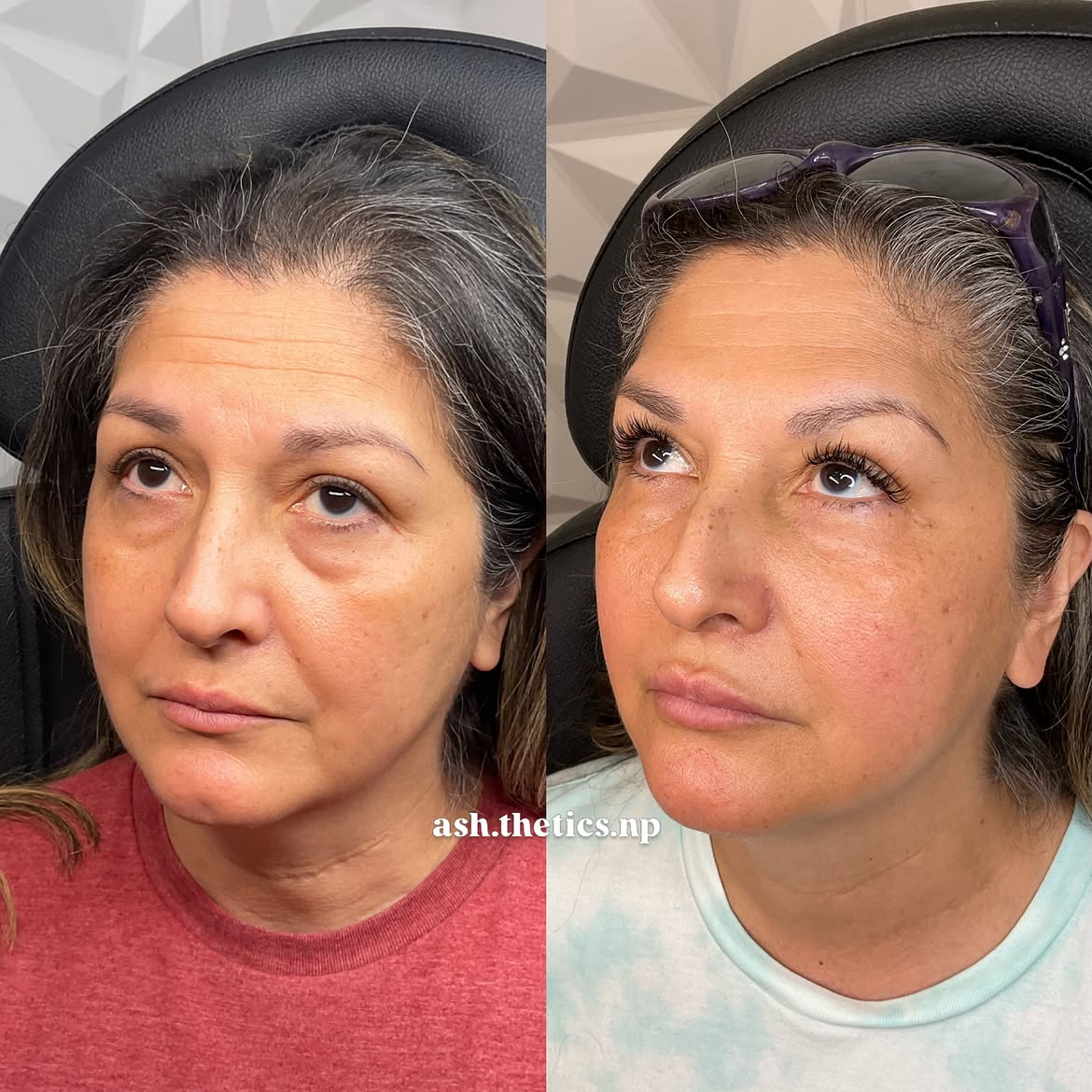
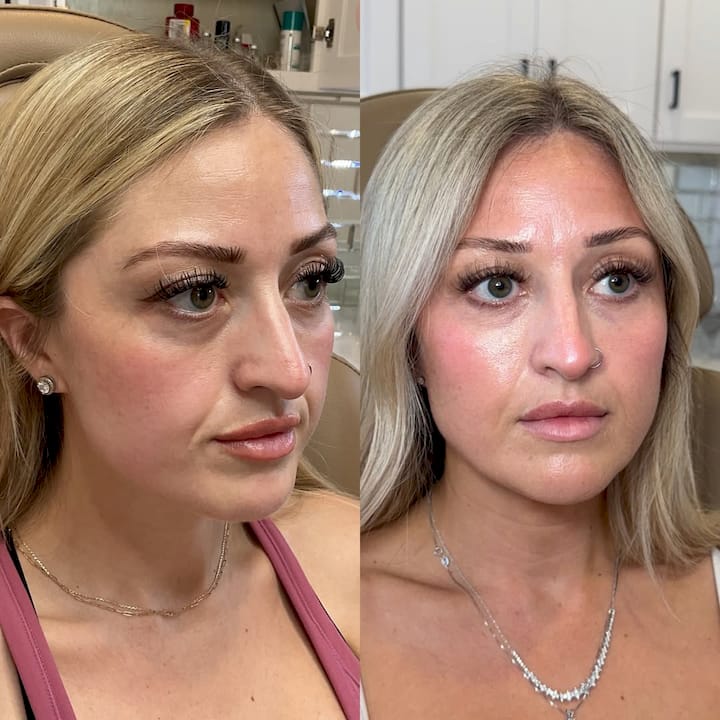
1. Hollowing. The area under your eye has lost volume and a groove runs from the inner corner of the eye toward the cheek. Shine a light from above: a hollow throws a shadow. This responds to PRF, EZ Gel or filler.
2. Thin skin. The skin under your eyes is the thinnest on your face. When it thins further, the purple-blue of the muscle and veins underneath shows through. Gently stretch the skin: if the color lightens, thin skin is part of it. This responds to PRF and to treatments that build collagen.
3. Pigment. Brown darkening that stays the same color when you stretch the skin is pigment. Injectables don't treat it. Skincare and some laser treatments do.
4. Bags of fat. The fat that cushions your eye can push forward with age and form a bulge. Look up: if the bulge gets bigger, it's fat. No injectable removes it, and filler placed above it can make the bulge look larger. The lasting fix is a lower eyelid surgery called blepharoplasty.
Most people have more than one. At your consult, we'll work out which, because that decides what's worth paying for.
Why is filler under the eyes risky?
Hyaluronic acid filler can give a beautiful result under the eyes in the right hands, and it's also where filler goes wrong most often.
A blue tint. Filler placed too close to the surface of thin skin can show through as a blue-grey shadow, called the Tyndall effect.
Swelling. Hyaluronic acid draws in water. Swelling below the eye, called malar edema, affects up to 11% of tear trough treatments in some reports, and it can appear months or even years later.
It lasts longer than you think. Imaging studies have found hyaluronic acid filler still present long after the 9 to 12 months it's usually said to last. Topping up every year can slowly build a puffiness that makes you look tired.
Blood vessels. Any facial filler carries a small risk of entering a blood vessel, and the area around the eyes is one of the places where that matters most.
The good news is that hyaluronic acid filler can be dissolved if something goes wrong. That's a real safety net, and it's one reason filler is still a reasonable choice for some people. For many people with hollowing, though, it's worth trying the alternatives first.
What is PRF, and what does it do under the eyes?
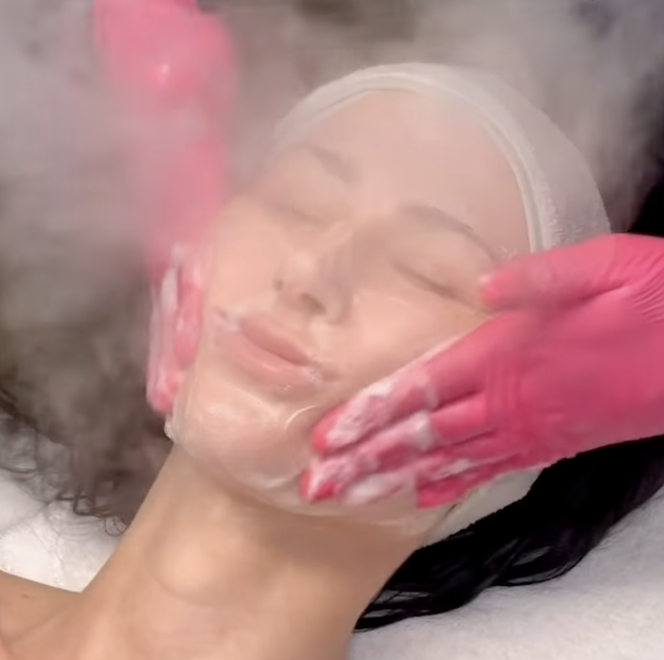
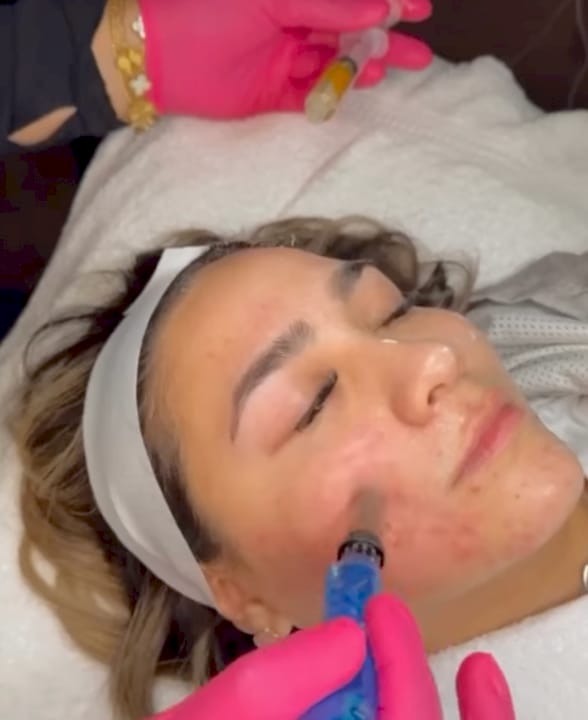
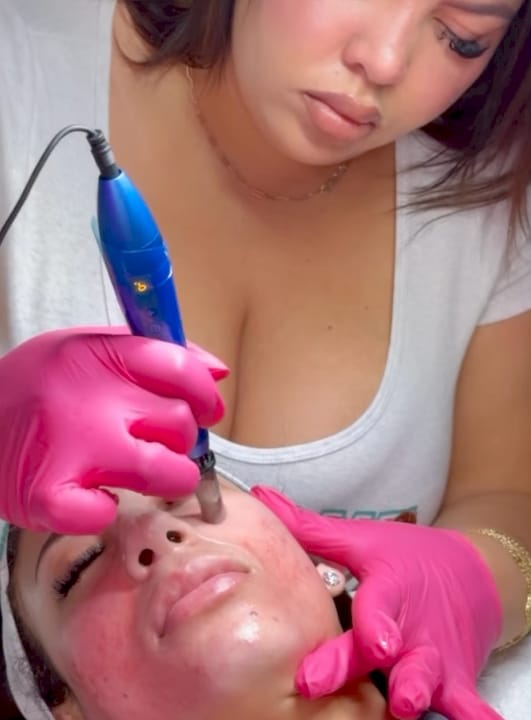
PRF stands for platelet-rich fibrin. We draw a small amount of your blood and spin it in a centrifuge at a slow speed, which separates out the platelets, growth factors and fibrin. No additives go in. What we inject is concentrated from your own blood.
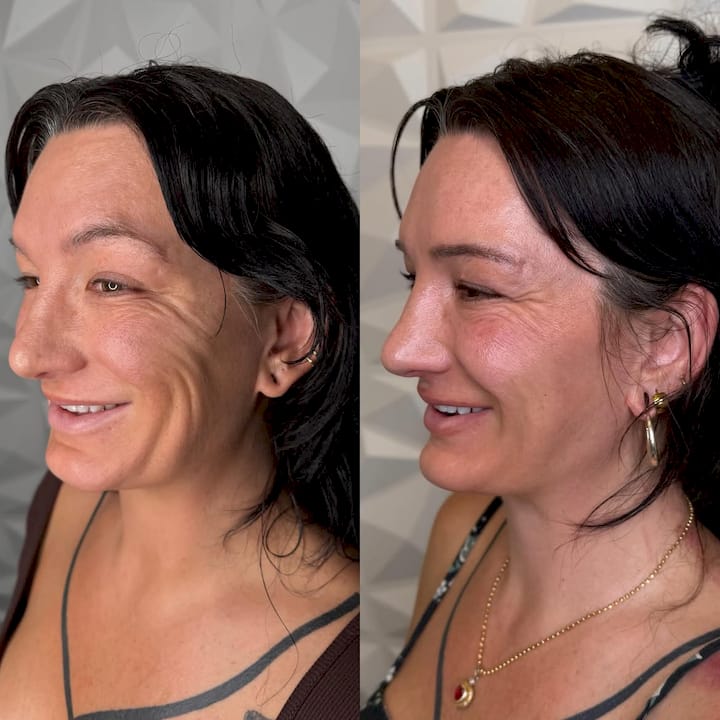
Under the eyes, PRF is mainly a skin treatment. The growth factors encourage new collagen, which thickens thin skin, softens fine lines and can reduce the blue-purple tone that shows through. It adds a little support, and you'll see it more as healthier skin than as filled volume.
Most people need two to three sessions, four to six weeks apart, and the change builds over the following months. Small studies of platelet treatments under the eyes show improvements in dark circles and skin quality, and a 2025 systematic review compared the platelet options for this area. The evidence base is still small, so we'll be honest about what it can and can't do for your face.
What is EZ Gel, and how is it different from PRF?
EZ Gel starts with the same blood draw. Your plasma, the protein-rich part of your blood, is heated until it thickens into a gel, then combined with fresh PRF. The result is a soft, filler-like gel made entirely from your own blood.
Because it's thicker, EZ Gel adds more volume than PRF on its own, which makes it the better choice when hollowing is the main problem. The volume lasts around three to six months, and the skin benefits from the PRF part can last longer. Most people do two to three sessions, four to six weeks apart.
Two things to know before you choose it. EZ Gel can't be dissolved the way hyaluronic acid filler can, so the injector's placement matters. And the evidence for EZ Gel is thinner than for PRF or filler, because it's newer.
PRF, EZ Gel or filler: which one suits you?
Prices are current at the time of writing. Check each service page for today's pricing, and see payment plans if you'd rather spread the cost.
What does treatment feel like, and how much downtime is there?
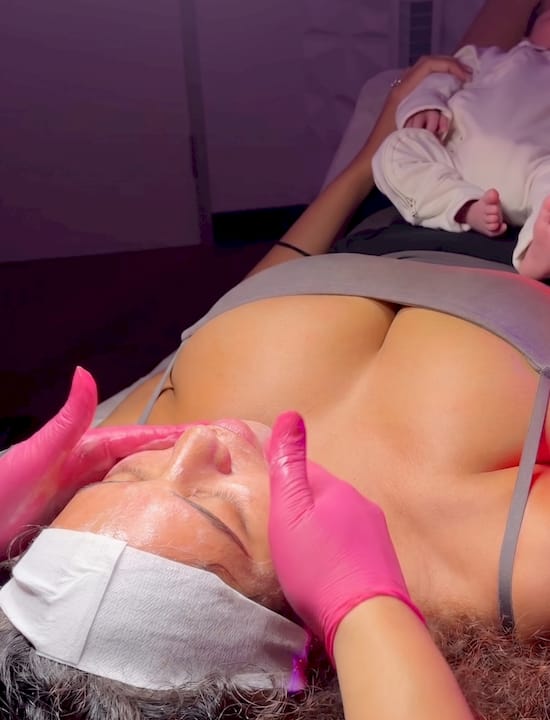
For PRF or EZ Gel, the appointment takes about an hour. We draw your blood, prepare it while numbing cream takes effect, and inject with a fine needle or cannula.
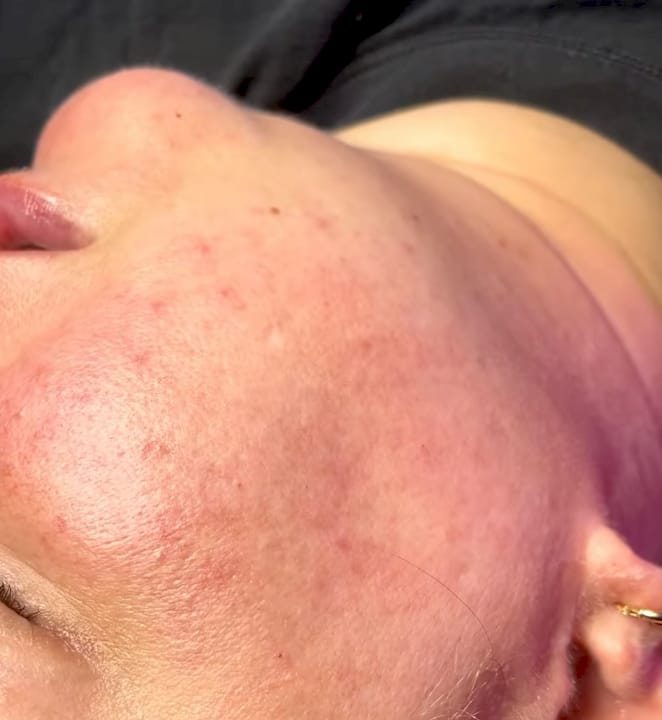
Expect some swelling and possibly bruising under the eyes for a few days, and up to a week after EZ Gel. Most people go back to work the next day with a little concealer. Avoid alcohol, blood thinners you don't need medically, and pressing on the area for the first day or two.
Results from PRF build slowly over the weeks after each session. With EZ Gel, you'll see some volume once the swelling settles, and more after your second and third sessions.
Who shouldn't have injectables under the eyes?
- People whose main problem is bags of fat. Injectables won't remove fat, and filler can make the bag look bigger. We'll talk to you about seeing a surgeon.
- People with a bleeding disorder, or on blood thinners they can't pause, for PRF and EZ Gel.
- Pregnant or breastfeeding patients.
- Anyone with an active skin infection or cold sore near the area.
What will it cost you?
The honest comparison is by course, because PRF and EZ Gel need more than one session.
- PRF: three sessions at $750 is $2,250.
- EZ Gel: two to three sessions at $1,500 is $3,000 to $4,500.
- Filler: usually one syringe at $700 to $750, sometimes topped up a year or more later.
Filler costs less on day one. PRF and EZ Gel cost more up front and avoid the risks of hyaluronic acid under thin skin. Which one is worth it for you depends on what's causing your tear troughs, which is the first thing we'll work out at your consult.
Frequently asked questions
Can you fix tear troughs without filler?
Often, yes. If the cause is hollowing or thin skin, PRF and EZ Gel can improve tear troughs using your own blood. If the cause is pigment or bags of fat, neither PRF nor filler fixes it.
How long does PRF under the eyes last?
The skin improvements from PRF build over a few months after a course of two to three sessions and can last a year or more. Most people do a maintenance session once or twice a year.
How long does EZ Gel last?
The volume from EZ Gel lasts around three to six months, and the skin benefits from its PRF content can last longer.
Is EZ Gel better than filler under the eyes?
EZ Gel is made from your own blood and avoids the blue tint and long-term swelling that hyaluronic acid filler can cause under thin skin. Filler adds more volume, lasts longer and can be dissolved. Which is better depends on your skin and how much volume you've lost.
Can EZ Gel be dissolved?
No. EZ Gel absorbs naturally over a few months, and hyaluronidase doesn't dissolve it.
Does PRF help dark circles?
PRF can help dark circles caused by thin skin, because it thickens the skin over the blue-purple tones underneath. It doesn't treat brown pigment.
How much is PRF under the eyes in Austin and San Antonio?
At The Injection Room, PRF costs $750 per session and EZ Gel $1,500 per session. Most people need two to three sessions.
Book your consult
We have three locations: South Congress in Austin, and South Flores and Eilan in San Antonio. Your consult is free. We'll work out what's causing your tear troughs, tell you which treatment fits, and give you a written plan and a price. If it's fat that needs a surgeon, we'll tell you that too.
EZ Gel and PRF at The Injection Room: PRF $750 per session, EZ Gel $1,500 per session.
Sources
- EyeWiki, American Academy of Ophthalmology, Complications of hyaluronic acid fillers, for the Tyndall effect, malar edema and vascular risk.
- Sollitto et al., A systematic review of platelet-rich plasma versus platelet-rich fibrin for periorbital rejuvenation, Journal of Cosmetic Dermatology, 2025.
- Mehryan et al., Assessment of efficacy of platelet-rich plasma on infraorbital dark circles and crow's feet wrinkles, Journal of Cosmetic Dermatology, 2014.
- Plastic and Reconstructive Surgery Global Open, Longevity and volume expansion of hyaluronic acid dermal fillers: a cross-sectional 3-dimensional MRI study.
This article is general information and does not replace a consultation with a qualified medical provider.